Wednesday 07 / October / 2026
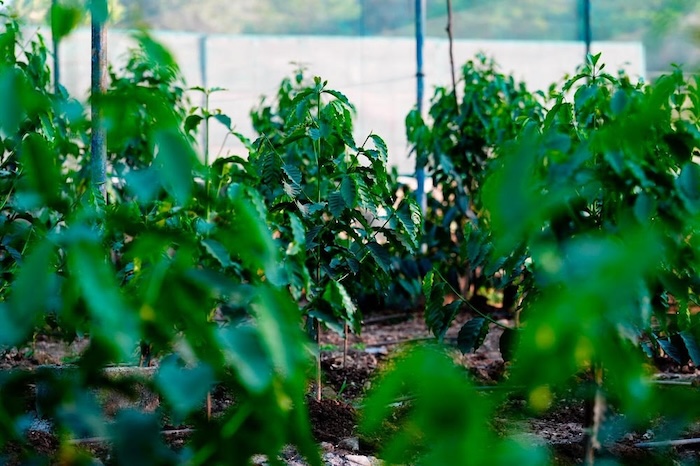
Muscat: The Ministry of Agriculture, Fisheries and Water Resources continues its efforts to diversify the agricultural sector's production base and capitalize on the comparative advantages of the various governorates of the Sultanate of Oman.
This is achieved through the implementation of development projects aimed at introducing high-value-added economic crops, thereby contributing to enhanced food security, increased economic returns for farmers, and the creation of sustainable investment opportunities in rural Oman.
Mountain agriculture in Dhofar Governorate is considered one of the promising sectors attracting increasing attention, given its unique environmental and climatic characteristics that qualify it to support high-value, economically viable crops, including Arabica coffee, which is witnessing growing global interest as one of the most important high-value commercial crops.
Engineer Radwan bin Abdullah Al Ibrahim, Director of the Agricultural Development Department in Dhofar Governorate and Director of the Arabica Coffee Cultivation Project in the Dhofar Mountains, affirmed that the project represents a strategic step towards investing in the governorate's abundant natural resources and reviving the cultivation of a promising crop that could become a new economic driver for farmers and investors in the agricultural sector.
He explained that the Ministry of Agriculture, Fisheries and Water Resources implemented the Arabica Coffee Cultivation Project in Dhofar Governorate as part of its efforts to enhance agricultural production and diversify economic crops.
The Director of the Agricultural Development Department noted that the project's first phase began in October 2025, coinciding with the celebration of Omani Agriculture Day.
He added that the project aims to revive Arabica coffee cultivation in the Dhofar Mountains, which enjoy a temperate climate and a suitable environment for the crop's growth. This will be achieved by providing coffee seedlings to farmers, offering technical and advisory support and training on modern agricultural practices, and contributing to the preparation of planting pits and the installation of modern irrigation systems that increase water use efficiency and achieve agricultural sustainability.
Engineer Radwan Al Ibrahim pointed out that the project is an extension of a series of development projects implemented by the Ministry with support from the Agricultural and Fisheries Development Fund. Previous projects included turmeric cultivation in 2022 and ginger cultivation in 2023, while the Arabica coffee project represents a new phase in the development of mountain agriculture and the investment in high-value crops.
Al Ibrahim explained that previous agricultural trials conducted in the Qayrun Hayrti area proved the success of cultivating Arabica coffee varieties, most notably the "Adini" and "Dawairi" varieties, which strengthened the project's expansion prospects across the governorate.
He clarified that the first phase targeted 30 farmers in the wilayats of Salalah, Taqah, and Mirbat. The second phase, currently underway, targets an additional 20 farmers, bringing the total number of beneficiaries to 50. The project will continue until the end of 2028, with a third phase planned for late 2026 to expand the number of farmers and cultivated areas.
Al Ibrahim emphasized that the project not only aims to increase agricultural production but also to create new economic activity in mountainous areas to boost the income of farming families and open promising investment opportunities in the production and marketing of Omani coffee. This will add value to the agricultural sector and promote sustainable development in the Dhofar Governorate.
Engineer Radwan Al Ibrahim affirmed that the Arabica coffee cultivation project represents a model for future agricultural projects that combine economic viability with environmental sustainability. It contributes to the investment of local natural resources and transforms them into development opportunities that yield long-term economic and social benefits.