Sunday 05 / July / 2026
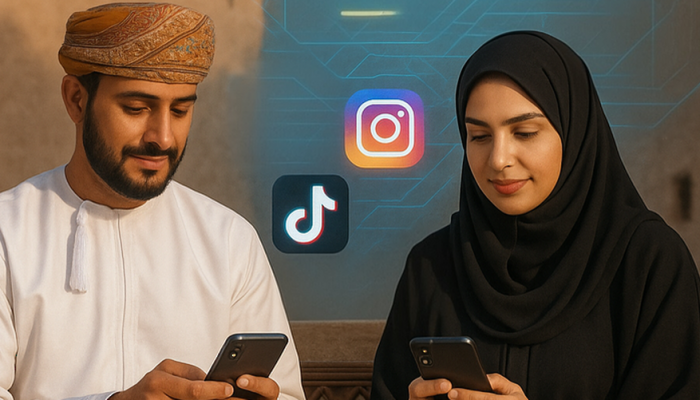
Muscat: Honesty, objectivity, truthfulness, and responsible, conscious engagement with societal issues through traditional and social media platforms are among the key factors that contribute to building trust, bridging gaps, overcoming challenges, and finding constructive solutions.
His Majesty Sultan Haitham bin Tarik had emphasised during his meeting with the Chairman and members of the State Council Office on the importance of engaging with societal issues and addressing challenges through accurate and responsible messaging across media and social media platforms reflects a firm approach to promoting effective communication, enhancing transparency, and clarifying national efforts, achievements, and gains.
Several specialists and stakeholders told the Oman News Agency that adherence to these principles when addressing issues raised in the media and social networking platforms is of critical importance, particularly given the openness of these spaces and the potential for irresponsible discourse.
Dr. Sabra bint Saif Al-Harasiya, an academic and educational researcher, said that engagement with media and social media is no longer an isolated individual act.
She explained that the impact of words today extends beyond the speaker, shaping public opinion, influencing social harmony, and reshaping collective awareness. Every digital interaction, she noted, contributes—consciously or unconsciously—to amplifying content through dissemination algorithms.
She added that content does not exist in a vacuum, but rather operates within a social and cultural environment shaped by accumulated posts, interaction patterns, and levels of public awareness. Consequently, responsibility becomes collective, as repeated individual behavior turns into a phenomenon, and multiplied phenomena reshape public discourse.
Dr. Al-Harasiya stressed the importance of shared standards governing digital interaction, balancing freedom of expression with the protection of societal values. Such standards, she said, are built through cultural and institutional consensus rather than individual decisions, making responsible digital behavior a societal value rather than a personal choice.
She pointed out that the speed at which misleading content and rumors spread often outpaces institutional correction efforts, especially amid limited critical verification skills among many users. This can confuse public opinion and influence debate before facts are fully clarified.
She emphasised that freedom of expression must be exercised through organised and responsible dialogue, noting that expression is a social practice with real implications for public opinion and social relations.
While freedom of expression in the digital space is a fundamental right, it is inseparable from ethical and behavioural responsibility.
Dr. Al-Harasiya highlighted that Omani society is characterised by balanced discourse and respect for differing opinions—both offline and online.
This balance, she said, is reflected in measured language and constructive management of disagreement, serving as a cultural asset that can be further strengthened in digital spaces to ensure that freedom of expression remains a conscious and constructive practice.
Rashid bin Abdullah Al-Shidhani, a public opinion researcher, stated that responsible communication enhances trust, reduces the gap between government and society, and limits the spread of misinformation.
This, he said, strengthens social cohesion, raises public awareness, promotes a culture of dialogue, and contributes to national unity and stability.
He explained that citizens’ awareness forms the foundation of social cohesion. Responsible engagement with societal issues helps convey accurate messages to concerned authorities without confusion, increasing opportunities for meaningful public participation in decision-making.
Al-Shidhani noted that government institutions in the Sultanate of Oman have adopted participatory approaches to decision-making through dialogue initiatives, enhanced government communication, and community forums, all of which support informed policymaking.
He warned that rumours and misconceptions undermine trust, distort societal awareness, and threaten national identity and values, stressing the need for swift, transparent, and accurate responses to prevent their spread.
For his part, Dr. Ahmed Murad, a social media activist, said that irresponsible handling of issues often stems from rushing to address matters before all details are clear or presenting them from a single perspective. He noted that professional and ethical responsibility requires verifying information from official sources and examining all aspects before forming opinions.
He added that credibility lies not in being the first to comment, but in being the most accurate and informed. He cautioned against exaggerating crises for engagement, explaining that such practices undermine trust and produce negative outcomes.
Lawyer Hamoud bin Abdullah Al-Mukhaini explained that the Basic Law of the State provides the constitutional framework for freedom of expression in the Sultanate of Oman. Article (35), he said, guarantees freedom of opinion and expression “within the limits of the law,” reflecting a legislative philosophy that balances freedom with responsibility.
He clarified that while individuals have the right to express opinions, criticize institutions, and raise complaints publicly, this right is subject to legal safeguards that protect reputation, dignity, privacy, and public order. Article (16) of the Information Technology Crimes Law, he noted, criminalizes defamation, slander, and violations of privacy through digital means.
Al-Mukhaini added that digital media platforms are required to be licensed by the Ministry of Information and are subject to the Media Law issued by Royal Decree No. 58/2024, which regulates content, combats misinformation, and upholds public morals without imposing prior censorship.
He emphasised that official bodies should interact positively with issues raised on social media, encouraging constructive criticism and treating these platforms as digital channels for receiving complaints and identifying solutions—without prejudice to legal accountability for abuses.
He concluded that Omani law protects the “voice of society” as long as it is exercised responsibly, respecting truth, privacy, and human dignity. He noted that initiatives such as the “Tajawub” digital platform provide structured channels for submitting complaints and demonstrate how digital interaction can evolve from random discourse into an effective institutional tool that enhances trust and social stability.