Sunday 15 / November / 2026
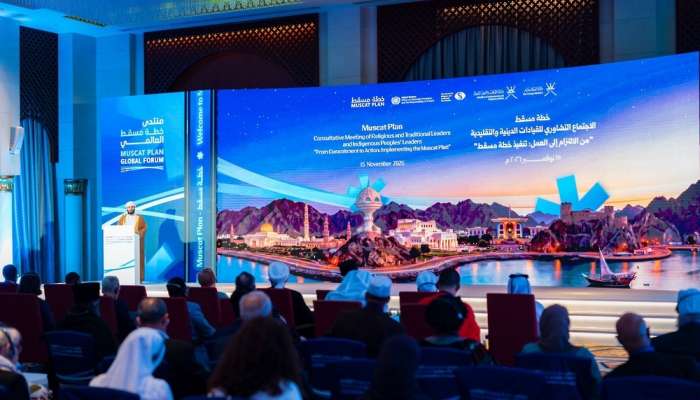
Muscat: The consultative meeting of religious and traditional leaders and indigenous peoples’ leaders kicked off today in Muscat, hosted by the Sultanate of Oman, represented by the Ministry of Endowments and Religious Affairs. The two-day meeting brings together 70 figures from 40 countries, including prominent international personalities, United Nations representatives, religious and traditional leaders and representatives of indigenous peoples, within the framework of international efforts aimed at entrenching a culture of peace and dialogue, addressing hate speech and preventing genocide, atrocity crimes, and incitement to them through peaceful mediation and international cooperation.
The convening of the meeting embodies the Sultanate of Oman's approach to supporting peace, understanding and peaceful coexistence among peoples. It is grounded in the human and civilizational values rooted in Omani society. These values have made dialogue, respect for diversity and rapprochement among cultures and religions fundamental pillars of Oman's relations with the countries of the world.
The meeting, which represents the first day of the Muscat Plan Global Forum, aims to discuss ways of activating the Plan, formulate recommendations and practical mechanisms to translate its objectives into implementable initiatives and expand the contribution of religious and traditional leaders and indigenous peoples’ leaders to conflict prevention, the reduction of societal tensions and the entrenchment of the values of understanding and peaceful coexistence.
Dr. Mohammed bin Said Al Maamari, Minister of Endowments and Religious Affairs, opened the proceedings of the consultative meeting, in the presence of Tarja Halonen, former President of the Republic of Finland and Sayyid Chalka Beyani, Under-Secretary-General of the United Nations and Special Adviser on the Prevention of Genocide.
The opening session was attended by a number of international personalities and representatives of traditional leaders and indigenous peoples’ leaders, among them Sonia Astuhuamán Pardavé, one of the women leaders of indigenous peoples; Robert Rehak, Chair of the International Religious Freedom and Belief Alliance and Dr. Mohamed Elsanousi, Executive Director of the Network for Religious and Traditional Peacemakers.
The meeting constituted an international platform for the exchange of expertise and visions regarding the role undertaken by religious and traditional leaders and indigenous peoples’ leaders in conflict prevention, the reduction of societal tensions, the enhancement of social cohesion and the building of bridges of trust and understanding among communities of differing cultures and beliefs.
The discussions focused on moving from shared principles and commitments to executive steps to activate the Muscat Plan, and on developing initiatives that respond to the needs of local communities and draw on the experience of community leaders in confronting hate speech and preventing conflicts, in support of international efforts aimed at establishing sustainable peace.
The first day's programme included a dialogue session entitled "From Commitment to Action: Implementation the Muscat Plan," with the participation of a number of traditional leaders and indigenous peoples’ leaders who contributed to the stages of preparing the Plan. It discussed ways of developing implementation mechanisms that take into account the needs of local communities and their cultural and social specificities as well as and the importance of involving their leaders in peacebuilding and conflict prevention efforts.
The meeting also featured three interactive working sessions addressing the Plan's main themes: capacity building, communication and cooperation.
The first theme addressed the development of the knowledge, skills and capacities necessary to empower leaders and communities to deal with and prevent tensions and conflicts. The second session focused on developing means of communication and constructive dialogue, confronting hate speech and enhancing understanding among the various components of society. The third theme discussed ways of consolidating partnerships and developing coordination and cooperation among traditional leaders, indigenous peoples’ leaders, government institutions, civil society organisations and international partners.
The working sessions gave participants the opportunity to exchange experiences and expertise, discuss existing challenges, and arrive at practical recommendations including clear objectives, proposed activities, potential partnerships and mechanisms for following up on progress in implementing the Plan.
The plenary session reviewed the outcomes of the working groups and the recommendations arising from them, in preparation for contributing to the drafting of an executive framework for the Muscat Plan, which is scheduled to be presented during the second day of the Forum, coinciding with the International Day for Tolerance, alongside discussion of the next steps within the Muscat track and opportunities to expand cooperation and consultation at the regional and international levels.
The Muscat Plan is the fruit of an international consultative track led by the Office of the Special Adviser to the United Nations Secretary-General on the Prevention of Genocide, in partnership with the Sultanate of Oman and the Network of Religious and Traditional Peacemakers. Its preparation included international consultations held in Abuja, Nigeria, in 2022, and in Muscat in 2023, with the participation of 78 traditional leaders and actors from 38 countries, before its official launch on 11 June 2026, by United Nations Secretary-General António Guterres.
The Plan aims to expand the contribution of traditional leaders and indigenous peoples’ leaders to addressing hate speech and preventing genocide, atrocity crimes and incitement to them, through dialogue and peaceful mediation, contributing to the building of safer, more cohesive and more stable societies.
Through its hosting of this Forum, the Sultanate of Oman offers an international platform for activating dialogue and mediation in efforts to prevent violence and conflicts, and for highlighting the role of local leaders in building trust and addressing disputes before they escalate, in continuation of its approach based on extending bridges of understanding among peoples and cultures and entrenching mutual respect and cooperation around common interests.
The Forum reflects the Sultanate of Oman's keenness to contribute to international initiatives aimed at enhancing rapprochement among peoples, supporting preventive efforts to address the causes of conflicts and tensions, and entrenching a culture of peace, tolerance, and peaceful coexistence.
The proceedings of the Muscat Plan Global Forum continue tomorrow, Monday, 16 November, in conjunction with the marking of the International Day for Tolerance. The outcomes of the consultative meeting and the recommendations and proposals it reached are scheduled to be reviewed. The next steps for implementing the Plan and developing international partnerships supporting its objectives will also be discussed. These efforts contribute to transforming shared principles into practical measures that support peace, stability and understanding among peoples.


