Sunday 15 / November / 2026
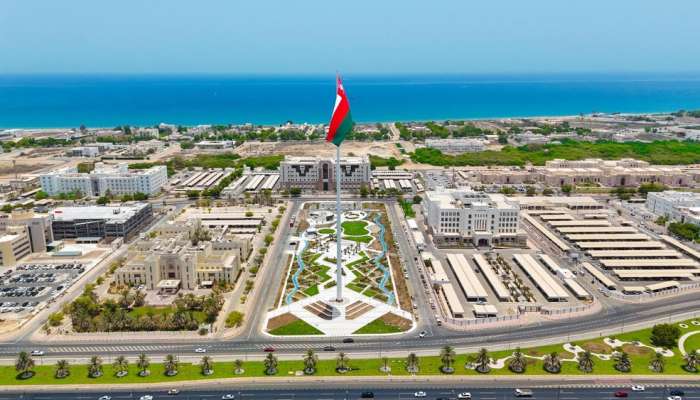
Muscat: Muscat Governorate continues to implement a package of development and investment projects across its six wilayats (districts) to develop infrastructure, improve the quality of services, and expand economic opportunities, in line with the objectives of Oman Vision 2040 and the governorate's vision of "Sustainable, Prosperous, and Vibrant Muscat."
His Highness Sayyid Bilarab bin Haitham Al Said, Minister of State and Governor of Muscat, noted that the projects and achievements witnessed in the governorate across various sectors are part of national efforts aimed at achieving integrated and sustainable development. This development is based on leveraging the governorate's economic, urban, and tourism assets, and strengthening coordination and partnership between government entities, the private sector, and the community.
His Highness explained that the most important criterion for these efforts is their direct impact on the lives of citizens and residents, through improving the quality of services, developing infrastructure and public facilities, and expanding economic and investment opportunities, while taking into account the development priorities of each wilayat. This ensures the efficiency of project implementation and the sustainability of their benefits.
His Highness emphasised the importance of continuing integrated work and making optimal use of available resources, while preserving the governorate's cultural identity and maintaining its natural resources, in order to achieve its vision of "a sustainable, prosperous, and vibrant Muscat," as a framework that combines development aspirations with the governorate's unique character. In the field of urban development, the governorate launched the "Greater Muscat Plan," which is based on five goals: a green, resilient, safe, interconnected, vibrant, and productive Muscat.
Sultan Haitham City in the Wilayat of Seeb is at the forefront of urban development, spanning 14.8 million square meters with investments exceeding OMR 3 billion . Construction has commenced in seven residential districts, with awarded contracts valued at approximately OMR 300 million and a 65 percent completion rate for infrastructure works. In the Wilayat of Bausher, the first phase of Al Thuraya City, covering more than 3 million square meters, has reached 90 percent completion, while road and infrastructure projects are 25 percent complete. Additionally, the "Saraya" project has been launched. Work continues on the Al-Ahd neighborhood and Amerat Hills projects in Amerat, as well as the Al-Khuwair Central Project and the Yiti Sustainable City, which has reached a completion rate of 69.6 percent . Regarding the road network and drainage, the 15-kilometer Al-Ansab-Al-Jafnain dual carriageway project has reached 94 percent completion. Work also continues on the 8.08-kilometer Al-Nuzha Street dual carriageway, upgrading Al-Salam Street in Seeb, and improving the Al-Khuwair route, with a completion rate of 57.14 percent . The total length of paved roads in the governorate reached approximately 6,206 kilometers by the end of October 2026, of which 111.86 kilometers were paved since the beginning of the year. In addition, more than 137,000 square meters of roads have been maintained. The surface water drainage channel on Al-Anwar Street has reached 94 percent completion. Projects have been awarded to address water accumulation in Al-Mawaleh South, design the Al-Ghubra North network, and enhance coastal protection in Muttrah, at an estimated cost of OMR 3 million .
Regarding commercial centers and open spaces in the urban area, the completion rate for the development of the commercial district in Ruwi has reached 40 percent on an area of 360,000 square meters, and work continues on the implementation of Muttrah Square on an area of 7,500 square meters, in addition to assigning the project to develop urban spaces in Al Qurm on an area of 31,000 square meters, and preparations for the development of the two commercial districts in Al Mahaj and Al Qurm.
In the tourism and environmental sector, the governorate boasts 243 registered historical and archaeological sites, 87 of which were restored by the end of December 2025. The 3-kilometer Muttrah cable car began its trial operation, and the tender for the development of the Najm Heritage Site in the Wilayat of Qurayyat, covering 499,000 square meters, was awarded. Additionally, the development of the Bausher Sands, spanning 362,000 square meters, is underway, along with preparations for the development of the Qurayyat waterfront, Qurum Beach, and the nature reserve. The Oman Botanic Garden in Al Khoudh witnessed operational readiness and the issuance of tenders for the management of its facilities following the issuance of Royal Decree No. (44/2026), which placed it under the jurisdiction of the Muscat Governorate, represented by Muscat Municipality.
In the industrial and economic sectors, the Rusayl Industrial City houses more than 340 projects and factories with investments exceeding OMR 780 million . Meanwhile, the Knowledge Oasis Muscat is attracting investments exceeding OMR 276 million , in addition to the Muscat Innovation Complex. In the food security sector, fish farming projects in Qurayyat and Seeb stand out, including the Blue Waters Company project with a capacity of 3,000 tons annually, Marjan International Fish Company with investments of OMR 3.8 million , and the Water Gateway Company with investments of nearly OMR 30 million and a targeted capacity of up to 10,000 tons annually, in addition to smart and vertical farming projects.
Regarding the empowerment of small and medium enterprises (SMEs) and the improvement of government services, the governorate provided organized locations for street vendors and increased the percentage of spending on SMEs from 64 percent to 74 percent of total expenditures for contracts and purchases during the first half of 2026. In October 2026, an agreement was signed to implement the "Unified Municipal System" project to digitally unify municipal services.
The ease of access to services index rose from 59 percent to 82 percent , and external beneficiary satisfaction increased from 50 percent to 76 percent , with improvements made to 33 work procedures during the first half of the year.
In the education sector, Muscat Governorate has approximately 159,000 students, 11,695 teachers, and 730 students in technical and vocational education. The number of government schools increased to 191 in 2025, with the ongoing construction of 7 new schools in Seeb and Amerat, the maintenance of 15 schools, the renovation of 5 schools, and the implementation of additions to 10 schools.
As for the health sector, the foundation stone was laid for the National Center for Genome and Human Data “Omani Genome” in Seeb at a cost exceeding OMR 4.2 million , and the Central Public Health Laboratory was opened in Al-Khoudh. The appointment system was generalized in the specialised clinics, evening clinics were expanded, general medicine services were activated in the Al-Salam and Amerat Heights complexes, and 24-hour services were activated in the Al-Khuwair North and Al-Jami’ neighborhood centers, with the continued development of the blood bank in Bausher, the Royal Hospital and Khoula Hospital, and planning for the establishment of Seeb Referral Hospital, the Women and Child Center in Sultan Haitham City, and the two kidney dialysis units in Seeb and Quriyat.
At the international, community and institutional level, Muscat Governorate participated in the UNESCO Global Learning Cities Programme in Shanghai, China, as the only participating Arab city. The governorate implemented 54 awareness and community service initiatives and 26 environmental protection initiatives. It also won the “Partnership and Cooperation” award for 2025, and it and Muscat Municipality were honored in the Individual Excellence System Application Safety Index for 2026. The Office of the Wali of Amerat and Muscat Municipality won the “Best Service Delivery Outlet” award for 2025, and the Governorate achieved a 95 percent score in the National Cybersecurity Index.