Wednesday 04 / November / 2026
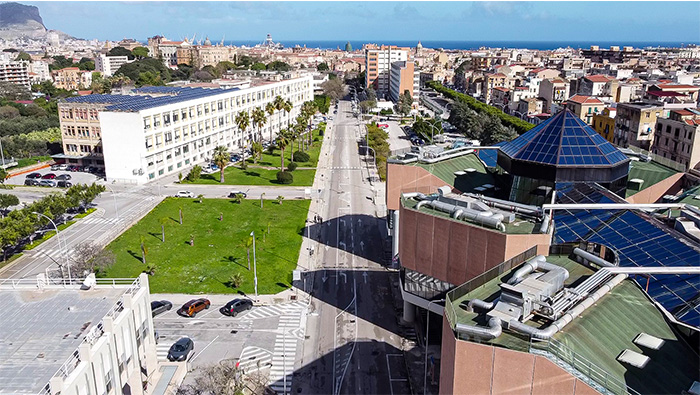
Palermo: For decades, students from Gulf countries seeking higher education abroad have favoured the United States, the United Kingdom and Australia. However, Italy is increasingly emerging as an attractive alternative, offering internationally oriented academic programmes, a distinctive cultural environment and opportunities for research and innovation.
Among the institutions attracting international interest is the University of Palermo (UNIPA), one of Italy’s major universities. Formally established on January 12, 1806, under Ferdinand III of Bourbon, the university traces its academic roots to an earlier period, including a public centre of higher learning established in 1498 and a Jesuit College founded in 1550. Today, it has more than 48,000 students enrolled.
In recent years, international students have shown growing interest in the university, drawn by its student-centred approach to teaching, academic programmes and opportunities for financial assistance. Its educational model combines rigorous academic instruction with interactive learning, collaborative projects and research opportunities, encouraging critical thinking, independent learning and intellectual development.
Scholarships administered through Italy’s regional student welfare system, including ERSU, and specific grants for eligible students from conflict-affected areas may also help widen access to higher education.
At a time when some universities are experiencing declining enrolments, UNIPA continues to expand its international outlook, reflecting its emphasis on academic development, research and collaboration.
“Located in the historic city of Palermo, which serves as a gateway between Europe and the wider Mediterranean, UNIPA offers students a unique geographical and cultural advantage. Its strategic location provides opportunities for academic collaboration, cultural exchange and international mobility, making it an attractive destination for students from different parts of the world,” said Prof. Massimo Midiri, Rector of the University of Palermo.
With more than 168 degree programmes across first- and second-cycle studies, the university offers students a broad range of academic pathways. Its programmes span established disciplines as well as emerging fields that are increasingly important to the global economy and the future of scientific research.
The university is also seeking to strengthen its academic ties with institutions across the Gulf region through proposed student exchange programmes, particularly in medicine and engineering.
UNIPA is prepared to formalise these partnerships through memoranda of understanding (MoU), with the signing process expected to move forward once the geopolitical situation stabilises.
“Our initiative is aimed at expanding cross-border academic collaboration, promoting knowledge exchange and creating new opportunities for students to gain international academic experience,” Midiri said.
Speaking at his office in Palazzo Steri, Midiri outlined the university’s vision of aligning its academic and research priorities with the evolving needs of the modern world.
“Alongside its established academic disciplines, UNIPA is strengthening its focus on emerging and increasingly important fields, including artificial intelligence (AI), robotics, biodiversity and sustainability. These areas reflect the university’s commitment to addressing contemporary global challenges through research, education and innovation,” he said.
The university believes that a growing international presence can enrich academic life by bringing together students with different perspectives, experiences and ideas. Such diversity, Midiri said, creates opportunities for meaningful intercultural exchange while strengthening the institution’s international profile.
“UNIPA welcomes talented students from across the globe who can contribute to its academic development and help strengthen its position within the international higher education landscape,” he added.
The appeal of Palermo
Beyond its academic offerings, Palermo itself plays an important role in attracting students.
The Sicilian capital combines a Mediterranean climate with a rich cultural heritage, historic architecture and a vibrant urban environment. For international students, the opportunity to pursue a university education while experiencing the city's distinctive history and lifestyle can be an important consideration when choosing a study destination.
“The Mediterranean climate, rich cultural heritage, historical architecture, vibrant lifestyle and scenic beauty create an appealing environment for both study and personal development. For many students, the opportunity to combine a quality university education with the experience of living in such a distinctive city is an important part of their decision to study at UNIPA,” Midiri said.
Looking ahead, the university aims to build on its international presence by developing new academic partnerships, investing in emerging fields of study and welcoming students whose ambitions and talents can contribute to its academic community.
Through its Mediterranean identity, diverse academic programmes and commitment to research and innovation, UNIPA is seeking to strengthen its position as a destination for students looking for an international university experience.
Focus on quality and student welfare
Alongside its academic ambitions, UNIPA is working to improve its infrastructure, student services and overall campus experience.
In Italy, the National Agency for the Evaluation of Universities and Research Institutes (ANVUR) plays a central role in evaluating higher education institutions and promoting continuous improvement in teaching, research and institutional performance. Its AVA 3 framework emphasises quality assurance, institutional self-assessment, effective resource management and the systematic monitoring of educational activities.
Midiri said the university had continued to focus on strengthening its academic environment and improving the student experience in line with these principles. “Achieving excellence in higher education is an ongoing process that requires regular evaluation, investment, responsiveness to student needs and a strong commitment to improvement,” he said.
As part of these efforts, the university has undertaken work to renovate existing facilities, improve campus infrastructure and enhance the physical environment in which students study and develop.
Midiri said that university life extended beyond classrooms and lecture halls, with well-maintained facilities, appropriate learning spaces and accessible support services playing an important role in students’ academic and personal development.
The university is also working to improve practical facilities, including on-campus dining services, to make daily life more convenient for students.
“Our objective is to create an environment in which students can concentrate on their studies while benefiting from essential services that support their daily university experience. The continued development of these services forms part of our broader commitment to creating a student-centred institution that values both academic achievement and personal well-being,” he said.
Student health and welfare are also important elements of the university’s approach. Recognising that academic life can bring personal and emotional challenges, UNIPA aims to promote both physical and mental well-being and ensure that students are aware of the support available to them.
“University life can present a range of academic, personal and emotional challenges, making access to appropriate health support an important element of student welfare. Our commitment extends to promoting both physical and mental well-being. We aim to ensure that students are aware of the support available to them and can seek appropriate assistance when facing health-related concerns,” Midiri said.
Students can also seek medical assistance through Policlinico, the university hospital, where healthcare professionals provide medical guidance and treatment.
The Rector said the university viewed its ongoing evaluation and development efforts as opportunities to identify areas for improvement, strengthen institutional processes and respond to feedback from students and other stakeholders.
ANVUR's quality-assurance framework provides a broader context for these initiatives, encouraging institutions to assess their performance and improve the quality of teaching, research and student services. “Our ongoing efforts to renovate facilities, improve campus services, provide food facilities and support students' healthcare needs are consistent with these broader quality objectives. We remain committed to identifying areas for improvement, strengthening institutional processes and responding constructively to feedback from students and other stakeholders,” Midiri said.
“Listening to students and understanding their experiences are essential to ensuring that improvements translate into meaningful benefits for the academic community.”
He acknowledged that further work remained but said the progress made over the past year represented an important step in the university's institutional development. “We view the evaluation process as an opportunity to reflect, learn and establish stronger foundations for the future,” he added.
The university's priorities, he said, include enhancing infrastructure, promoting student well-being and fostering a culture of accountability and continuous improvement.
“We are confident that sustained effort, responsible planning and a student-centred approach will help us continue developing an academic environment that supports learning, personal growth and professional success. We reaffirm our commitment to quality, transparency and the continuous improvement of the educational experience, in keeping with the principles that underpin Italy's higher education quality-assurance system,” Midiri said.
Addressing accommodation challenges
While international mobility creates opportunities for universities and students, visa procedures and the availability of accommodation remain important challenges for those seeking to study abroad.
The University of Palermo is exploring possible academic solutions for non-European Union students who face difficulties obtaining visas to pursue their studies in Italy.
“In collaboration with other Italian universities, the institution is engaging in discussions with the relevant consular authorities to identify potential solutions to visa-related difficulties that are preventing many aspiring international students from beginning their studies as planned,” Midiri said.
Figures provided for the relevant application period indicate that approximately 50,000 student visa applications were submitted in 2026, of which 4,800 resulted in visas being issued.
The figures highlight the potential gap between demand for access to Italian higher education and the number of applicants able to obtain the necessary authorisation to travel. The precise geographical and administrative scope of these figures, however, requires clarification.
The university is also discussing plans with the relevant authorities to acquire additional buildings in Palermo to address the growing demand for student accommodation.
The proposed initiative forms part of broader efforts to expand student support facilities and ensure that the city's growing student population, including international students, has access to suitable housing.
Against this backdrop, UNIPA is seeking to maintain and expand opportunities for international students while addressing the administrative and practical challenges associated with studying abroad.
An enduring academic legacy
The University of Palermo's history is associated with prominent figures in science and public life, including Nobel Prize-winning physicist Emilio Segrè, astronomer Giuseppe Piazzi, chemist Stanislao Cannizzaro and anti-Mafia magistrate Giovanni Falcone, who graduated from the university's law faculty.
Cannizzaro made significant contributions to modern chemistry and the development of atomic theory, while Falcone became internationally recognised for his work against organised crime in Italy.
Today, UNIPA continues to build on its academic heritage while expanding its focus on research, innovation and international collaboration.
Its emphasis on emerging disciplines, student welfare and partnerships with institutions abroad reflects an ambition to respond to the changing needs of higher education while preserving its distinctive Mediterranean identity.
For students considering Italy as an alternative to more traditional overseas study destinations, the university offers a combination of established academic programmes, research opportunities and life in a historic Mediterranean city.
As it pursues further international partnerships and improvements to its campus and student services, UNIPA is seeking to strengthen its appeal to students from the Gulf and other regions, positioning itself for a more prominent role in the increasingly interconnected world of higher education.




