Monday 12 / October / 2026
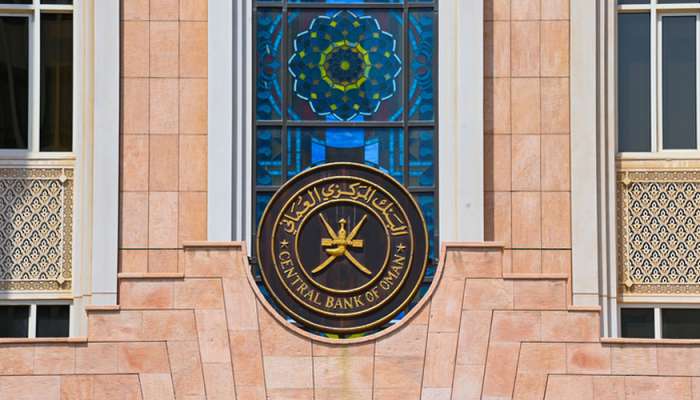
Muscat: Oman’s central bank raised OMR65 million by way of allotting treasury bills on Monday. The value of the allotted Treasury bills include OMR10 million, for a maturity period of 28 days.
The average accepted price reached OMR99.700 for every OMR100, and the minimum accepted price arrived at OMR99.700 per OMR100. The average discount rate and the average yield reached 3.91071% and 3.92248%, respectively.
Additionally, treasury bills amounting to OMR44.5 million, for a maturity period of 91 days was also allotted. The average accepted price reached OMR98.972 for every OMR100, and the minimum accepted price arrived at OMR98.965 per OMR100. The average discount rate and the average yield reached 4.12298% and 4.16580%, respectively.
In addition, treasury bills amounting to ONR10 million for a maturity period of 182 days was also allotted on Monday. The average accepted price reached OMR97.910 for every OMR100, and the minimum accepted price arrived at OMR97.910 per OMR100. The average discount rate and the average yield reached 4.19148% and 4.28096%, respectively.
Moreover, treasury bills amounting to OMR0.5 million for a maturity period of 364 days was also allotted. The average accepted price reached OMR96.350 for every OMR100, and the minimum accepted price arrived at OMR96.350 per OMR100. The average discount rate and the average yield reached 3.66003% and 3.79868%, respectively.
Treasury bills are short-term highly secured financial instruments issued by the Ministry of Finance, and they provide licensed commercial banks the opportunity to invest their surplus funds. The Central Bank of Oman (CBO) acts as the Issue Manager and provides the added advantage of ready liquidity through discounting and repurchase facilities (Repo).
It may be noted that the interest rate on the Repo operations with CBO is 4.50% while the discount rate on the Treasury Bills Discounting Facility with CBO is 5.00%.
Furthermore, treasury bBills promote the local money market by creating a benchmark yield curve for short-term interest rates. Additionally, the Government may also resort to this instrument whenever felt necessary for financing its recurrent expenditures.