Wednesday 16 / September / 2026
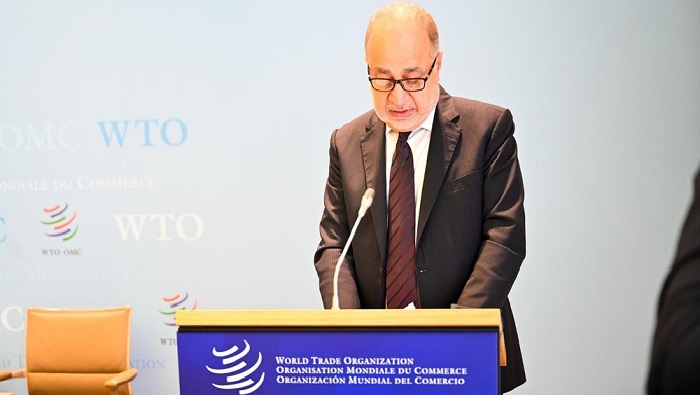
Geneva: The Sultanate of Oman has reaffirmed its perspective on the current situation and its implications for international trade and vulnerable economies. Recent developments in the Strait of Hormuz have highlighted a fundamental reality: the security of trade, energy and food supplies, and broader economic stability, are deeply interconnected. Disruption in one area can quickly have consequences far beyond the region.
This was stated in the Sultanate of Oman’s statement during the Public Forum 2026 of the World Trade Organisation (WTO), delivered by Idris Abdulrahman Al Khanjari, Permanent Representative of the Sultanate of Oman to the United Nations and International Organizations in Geneva.
He said during the special session themed “The Strait of Hormuz in Crisis: Protecting the Most Vulnerable Economies” that the recent developments in the Strait of Hormuz have highlighted a fundamental reality: the security of trade, energy and food supplies, and broader economic stability, are deeply interconnected. Disruption in one area can quickly have consequences far beyond the region.
He added that the Strait of Hormuz is not only a strategic maritime passage; it is a vital artery of global trade and energy. Its stability therefore has direct implications for international commerce and sustainable development, particularly for developing and vulnerable economies with limited capacity to absorb higher transport, energy and insurance costs or prolonged supply-chain disruptions.
He pointed out that the Sultanate of Oman therefore stresses the importance of ensuring safe, regular and unhindered navigation and the free flow of trade through the Strait, in accordance with international law, including the international law of the sea.
He affirmed that Oman approaches regional challenges through dialogue, constructive neutrality, respect for State sovereignty and quiet diplomacy. He said “We believe that maintaining channels of communication helps build trust, reduce misunderstandings and create the conditions for peaceful solutions”.
He stressed that Oman continues its consultations with Iran and the GCC states with a view to reaching practical understandings that can facilitate safe and regular navigation through the Strait. These efforts, Al Khanjari reaffirmed, are being pursued responsibly, taking into account the security, legal and navigational complexities involved, and the need for any arrangements to be practical, sustainable and acceptable to the parties concerned.
He said that the consequences of disruption in the Strait extend well beyond security and politics. They can rapidly increase shipping, insurance, energy and food costs, disrupt supply chains and place further pressure on economies already facing significant vulnerabilities.
He explained that these effects are particularly serious for developing countries that rely heavily on imports and have less capacity to absorb external shocks. A crisis affecting a major trade route can therefore have disproportionate consequences for their development prospects and their ability to achieve the Sustainable Development Goals.
He added that maritime security also has a human dimension. Oman's recent assistance to the crew of a commercial vessel off Musandam is a reminder that behind global trade are seafarers whose safety depends on a secure and stable maritime environment.
The session, organised by the United Nations Conference on Trade and Development (UNCTAD), came amid growing international concern over the economic and trade repercussions arising from the disruptions witnessed in the Strait of Hormuz, as one of the world's most vital maritime corridors for trade and energy.