Wednesday 19 / August / 2026
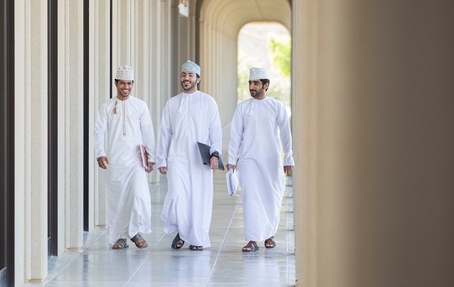
Muscat: The Higher Education Admission Centre at the Ministry of Education on Wednesday announced the results of the first admission round for the 2026/2027 academic year for General Education Diploma holders and their equivalents.
A total of 33,031 students have received academic offers, representing 70.4% of the total successful applicants, which numbered 46,934.
Students were notified of their results via SMS and directed to review their admission outcomes and the latest competitive cut-off scores for all programs to which they had applied through the student registration portal of the admission system, should they wish to do so.
Ahmed Mohammed Al Azri, Director General of the Higher Education Admission Center, stated in a press release that the indicators from this first admission round reflect a notable expansion in available admission opportunities for General Education Diploma graduates.
He noted that the total number of available academic seats reached 34,113, marking a year-on-year growth rate of 17%.
This expansion coincided with a rise in the number of students receiving offers—from 27,537 in the first round of the previous academic year to 33,031 this year, an increase of 5,494 offers and a growth rate of approximately 20%.
He emphasised that over 7 out of every 10 eligible applicants securing an offer in the first round demonstrates the level of admission opportunities available, with continued competition for vacant seats in subsequent admission stages.
He further explained that the admission offers were distributed across government higher education institutions, domestic scholarships and grants at private higher education institutions, and external scholarships and grants.
Government institutions claimed the largest share with 17,430 offers, accounting for 52.8% of the total, followed by domestic scholarships and grants with 14,950 offers (45.3%), and external scholarships with 651 offers (approximately 2.0%).
The Director General also reported that the round's results left 1,082 seats unfilled, representing 3.2% of the total available seats, due to the insufficient number of applicants meeting the admission requirements for certain programs.
He clarified that the utilisation of available seats depends on the alignment of students' qualifications and preferences with program-specific admission criteria, capacity limits, competitive cut-off scores, and ranking preferences—factors that may result in unfilled seats in some programs even while other students remain without offers in this stage.
He added that the Center, in coordination with higher education institutions and relevant authorities, will work to fill available seats in subsequent admission rounds in accordance with approved regulations and procedures.
Regarding the most competitive programs, the Director General stated that the results indicated high competitive cut-off scores in medical, health, and education programs, as well as a number of external scholarship programs.
He noted that the lowest competitive cut-off score for admission to the General Medicine programme at Sultan Qaboos University was 98.15% for males and 99.2% for females; at the National University of Science and Technology, 98.3%; and at Dhofar University, 97.9%.
For Oral and Dental Surgery, the cut-off stood at 95.1% for males and 97.55% for females.
In education specialisations, the average lowest accepted competitive score at Sultan Qaboos University was 91.65% for males and 96.05% for females, while at the University of Technology and Applied Sciences it was 91.35% for males and 96.6% for females.
The external scholarship programmes STEM and ESAM recorded cut-off scores of 97.7% and 96.45%, respectively.
On the next steps following the announcement, the Director General urged students to promptly complete their registration procedures at the respective higher education institutions, in line with the mechanisms established for each institution or programme. The registration period begins on Thursday, 20 August, and continues until 12:00 PM on Monday, 24 August 2026.
The Centre advised students not to postpone the completion of their registration until the final hours and to monitor instructions posted on the Center's official website and social media accounts. It emphasised that failure to complete registration within the specified period will result in forfeiture of the admission offer.
He further noted that the announcement of the first-round results does not mark the end of admission opportunities for students, as the Centre will continue executing subsequent rounds and services according to the approved timeline.
The preference modification service will be open from 27 to 30 August 2026, allowing students to compete for vacant seats that become available during this stage, subject to admission criteria, competitive scores, and approved regulations. The Centre will announce dates for the second round at a later time.
He also explained that the Centre will conduct independent placement processes for second-session students and holders of non-Omani certificates whose final results are released after the first round, ensuring their right to compete under the established mechanisms and procedures.
Regarding the self-financed admission system, he stated that for the second consecutive year, the Higher Education Admission Centre will activate the self-financed admission track, which regulates admission for students wishing to study on a self-financed basis at Sultan Qaboos University and in education specialisation programmes at private higher education institutions in the Sultanate of Oman. The Centre has issued a dedicated guide detailing available programs, conditions, and registration procedures, with registration open from 8 to 10 September 2026.
Al Azri further noted that this year's admission and registration season has witnessed several enhancements to the unified admission system, including streamlining student data management, improving the programme search function and the identification of eligible options, and providing more flexible means for ranking preferences.
These developments were accompanied by awareness and guidance efforts through manuals, visual materials, digital platforms, and various support channels—aimed at equipping students and their families with the necessary information and supporting their decision-making throughout the registration and admission stages.