Monday 10 / August / 2026
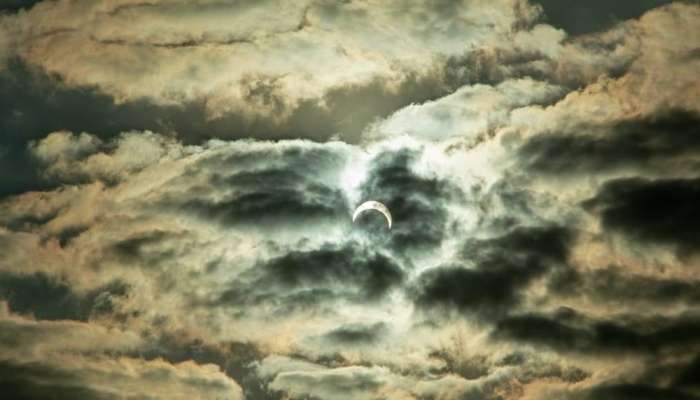
Muscat: The world is eagerly anticipating the total solar eclipse this Wednesday, one of the most significant astronomical events of the year. The Moon's shadow will trace a narrow path across parts of the Northern Hemisphere, while vast regions will witness a partial eclipse. The phenomenon will not be visible from the Sultanate of Oman.
Wisal Salim Al Hinai, Head of the Community Communication Committee at Oman Astronomical Society, explained that a solar eclipse occurs when the Moon positions itself between the Earth and the Sun during the new moon phase, aligning the three celestial bodies in a manner that allows the Moon's shadow to fall upon the Earth's surface.
She clarified that an eclipse does not occur with every monthly new moon due to the approximately five-degree inclination of the Moon's orbital plane around the Earth relative to the Earth's orbital plane around the Sun.
She told Oman News Agency (ONA) added that astronomical calculations indicate the path commences over northern regions of Russia, traversing the Arctic Ocean, Greenland, Iceland, and the Atlantic Ocean, before reaching northern Spain, a small portion of northern Portugal, and the Balearic Islands. The partial eclipse zone will extend across most of Europe, parts of North America, and northwestern Africa, she added.
Spain, she observed, will experience a particularly distinctive viewing spectacle, as the eclipse will occur during the evening hours shortly before sunset, with the Sun positioned low above the horizon throughout its phases. In some areas, the Sun may set while still partially eclipsed.
She further highlighted that this eclipse represents an exceptional event for several regions along its path. Iceland, for instance, will witness its first total solar eclipse since 1954, while the Iberian Peninsula will experience a significant astronomical event following the last total eclipse visible from its territory in 1905.