Saturday 19 / September / 2026
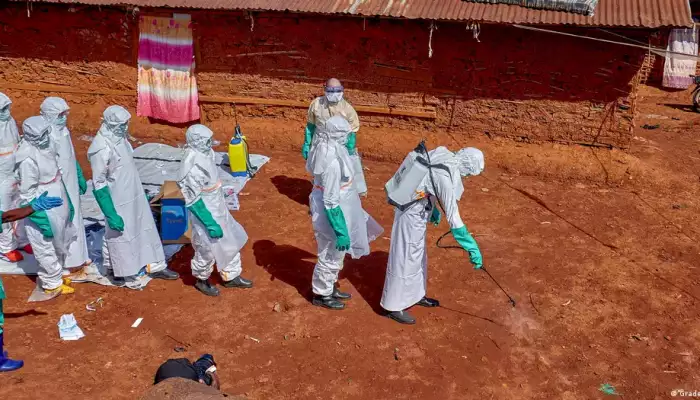
New Delhi: As Central Africa grapples with a deadly Ebola outbreak, India has emerged as a key player in the global response, taking on the urgent task of developing a vaccine against the Bundibugyo strain of the virus.
Backed by the World Health Organization (WHO) and the Africa Centres for Disease Control and Prevention (Africa CDC), the Serum Institute of India (SII) is collaborating with the University of Oxford and the Coalition for Epidemic Preparedness Innovations (CEPI) to fast-track a vaccine candidate aimed at containing the outbreak that began in the Democratic Republic of the Congo (DRC) in May 2026.
The WHO has classified the outbreak as a Public Health Emergency of International Concern, prompting countries across the region to strengthen surveillance systems, tighten border controls and introduce enhanced screening measures to prevent the virus from spreading across national boundaries.
The vaccine candidate, known as ChAdOx1 BDBV, targets the Bundibugyo strain of Ebola, for which there is currently no approved vaccine. Researchers are using the same viral vector technology that powered the Oxford-AstraZeneca COVID-19 vaccine, allowing manufacturers to rapidly scale up production once clinical-grade doses are ready.
The WHO has accelerated the review process, with trial doses expected to become available in the near future.
WHO Director-General Tedros Adhanom Ghebreyesus, who recently visited the affected Ituri province in the DRC, said a Bundibugyo vaccine could play a crucial role in controlling the epidemic and improving preparedness for future outbreaks.
Africa CDC chief Jean Kaseya confirmed that the vaccine would be manufactured by the Serum Institute of India, highlighting the country's growing role in global health security.
India on high alert
Although India has reported no Ebola cases, authorities have stepped up preventive measures at airports and healthcare facilities. Enhanced screening, isolation protocols and monitoring systems have been activated for travellers arriving from affected countries, particularly the DRC and Uganda.
Health officials say the measures are precautionary but necessary given the potential risk of international spread.
More than 1,500 suspected cases and around 650 deaths have been reported in the DRC and Uganda since the outbreak began. Unlike previous outbreaks caused by the highly lethal Zaire strain, the current epidemic involves the Bundibugyo virus, a less deadly but poorly understood variant for which no licensed vaccine or treatment exists.
The outbreak marks the DRC's 17th encounter with Ebola since the virus was first identified near the Ebola River in 1976.
As scientists race to develop effective countermeasures, experts warn that the outbreak remains a global concern. With vaccine development now underway, India is expected to play a pivotal role in efforts to contain the disease and prevent future epidemics.