Saturday 29 / August / 2026
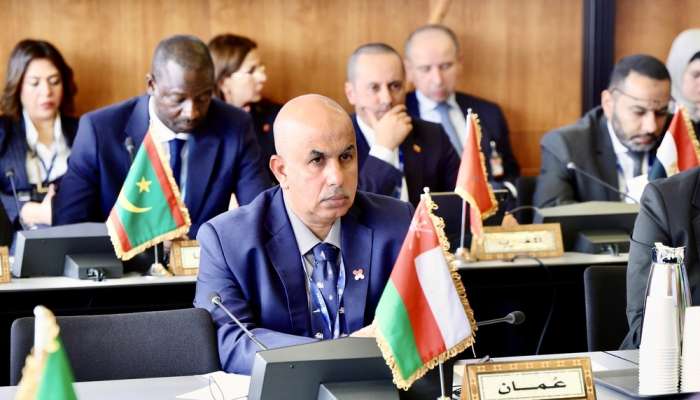
Geneva: The Sultanate of Oman is participating in the 79th World Health Assembly, which opened at the United Nations headquarters in Geneva on Monday and continues for several days. The event brings together health ministers and representatives of member states to discuss the most pressing global health issues and challenges.
The Omani delegation is led by Dr. Hilal bin Ali Al Sabti, Minister of Health.
In his address, the minister said that current health challenges — from communicable and non‑communicable diseases to mental health, antimicrobial resistance, health emergencies and digital transformation — cannot be addressed through fragmented approaches. They require an integrated framework built on four essential pillars: strengthening primary healthcare and prevention, investing in data and innovation, enhancing health system resilience, and ensuring long‑term sustainability.
He added that the Sultanate of Oman continues to implement comprehensive health reform aligned with Oman Vision 2040, including developing digital health infrastructure, strengthening data governance, expanding prevention and early detection, supporting mental health, enhancing national immunisation, embedding the One Health approach, and raising emergency preparedness, the minister said.
The minister also stressed the importance of reforming global health governance to keep pace with rapid change, by enhancing coordination among international initiatives, supporting national capacities, and facilitating knowledge exchange and technology transfer. This would contribute to a more equitable, efficient and sustainable health response for all countries, regardless of their level of development.
Concluding his address, the Minister of Health affirmed Oman’s firm belief that investing in people, promoting health equity, and building resilient, innovation‑driven health systems are the optimal path to achieving universal health coverage and the Sustainable Development Goals (SDGs).
The current session of the World Health Assembly is dominated by several highly significant strategic health files, focusing on health financing, digital health and reform of global health architecture. The agenda also includes follow‑up to the UN High‑Level Meeting on Non‑Communicable Diseases, budgetary and financing matters, and the health implications of armed conflict.
The assembly is convening at a decisive moment for global mental health, immediately following the historic UN High‑Level Meeting on Non‑Communicable Diseases and Mental Health in 2025. It will examine whether sufficient momentum is building to meet the targets of the Comprehensive Mental Health Action Plan by 2030.
Sessions will also address mental health, non‑communicable diseases, antimicrobial resistance, and maternal, infant and young child nutrition — an agenda reflecting the inter-connectedness of health issues in the current global landscape.
Separately, Dr. Hilal bin Ali Al Sabti, Minister of Health participated as guest of honour at the “Arab‑Swiss High‑Level Health Dialogue,” organised by the Arab‑Swiss Chamber of Commerce and Industry in Geneva on the sidelines of the 79th World Health Assembly.
The dialogue brought together Arab health ministers, senior government officials and leaders of leading Swiss health and technology companies, serving as a platform for structured public‑private dialogue to foster partnerships and accelerate investment opportunities.
Discussions focused on key shared strategic areas, including strengthening digital health systems, governance of artificial intelligence (AI) in healthcare, long‑term investment opportunities in Arab health markets, and presentations by Swiss companies of solutions aligned with regional health priorities.
The dialogue concluded by affirming the importance of structured institutional partnerships that go beyond traditional networking toward tangible, productive collaboration — partnerships that could accelerate health system development in the Arab region and enable integration of the latest Swiss technological solutions in building a better health future for all.
The Minister of Health also participated in a high‑level ministerial session on health system priorities and investment projects, where he outlined Oman’s comprehensive transformation in the health sector. The session brought together government decision‑makers and key actors in the Swiss health innovation ecosystem to discuss promising cooperation opportunities in innovation and modern health technologies.
In his address, the minister expressed deep appreciation to the Arab‑Swiss Chamber of Commerce and Industry for hosting the dialogue, describing Geneva as a city that has long served as the conscience and faithful guardian of international cooperation.
The world stands at a decisive turning point, with health systems undergoing radical restructuring under rising demand, shifting disease burdens and an unprecedented technological revolution, the minister said. The question is no longer whether to cooperate, but how to cooperate with boldness and speed.
Oman’s health journey is grounded in Oman Vision 2040, which elevates health from a service sector to a pillar of national development, the minister said. Oman is building a proactive, resilient and sustainable health system for future generations.
He reviewed the transformation rests on five pillars: strengthening public health and prevention; entrenching universal health coverage as a human right; building national health cadres with global competence; establishing governance and transparency across health institutions; and enhancing pharmaceutical security, digital transformation and a culture of innovation.
The minister noted that sustainable health systems are built through genuine alliances between governments and the private sector, between science and policy, and between nations with a common purpose. Oman embodies this through active public‑private partnerships, systematic attraction of global talent, and a regulatory environment designed to draw the world’s highest capabilities.
The minister also presented Oman’s digital health agenda, which aims to build an integrated national digital system enabling data‑driven governance and elevating patient care, positioning Oman among leading nations in smart, precise healthcare.
He presented Oman as an exceptional health partner, grounded in political stability, long‑term institutional vision and a steadfast commitment to excellence. These enablers have allowed Oman to extend its ambition beyond national health development to actively contributing to health systems at regional and international levels.
Oman, represented by the Ministry of Health, participated today in the meeting of the Arab Council of Health Ministers, held at the World Health Organization (WHO) headquarters in Geneva on the sidelines of the 79th World Health Assembly, with health ministers and heads of delegations from Arab member states in attendance.
The Omani delegation was headed by Dr. Hilal bin Ali Al Sabti, Minister of Health.
The meeting brought Arab health leaders together for open dialogue on strategic health priorities, focusing on three main axes: enhancing Arab coordination in international health forums, exchanging expertise in health system development and digital transformation, and uniting efforts to confront epidemics and health emergencies, thereby strengthening Arab health security.
Participants agreed on the importance of continued coordinated joint Arab action as a genuine lever for developing national health systems, enhancing regional health security, and advancing sustainable development goals in the health sector.
Separately, the Sultanate of Oman participated in the ministerial meeting of the Ministerial Alliance of Champions against Antimicrobial Resistance (AMR), organised by Sweden on the sidelines of the assembly, with the participation of several ministers and senior international officials.
The meeting addressed a comprehensive roadmap to confront the AMR crisis, including adopting the One Health approach, promoting rational antibiotic use, supporting epidemiological surveillance systems, enhancing research and innovation for new treatments and diagnostics, and deepening international cooperation to reduce the heavy health and economic burdens of antimicrobial resistance.
Antimicrobial resistance ranks among the most serious long‑term global health threats, the meeting heard. As antibiotic efficacy declines and resistance rates rise, warnings grow of a silent health wave that could return humanity to the pre‑antibiotic era. Confronting this threat requires collective political will and robust international coordination, not individual efforts.
Oman’s participation in the Alliance underscores its ongoing national efforts to strengthen health security and rationalise antibiotic use within a national strategy aligned with the Sustainable Development Goals (SDGs) and WHO orientations.
The Omani delegation also includes Dr. Ahmed bin Salim Al Mandhari, Undersecretary of the Ministry of Health for Planning and Health Organisation and several ministry’s officials.