Saturday 16 / May / 2026
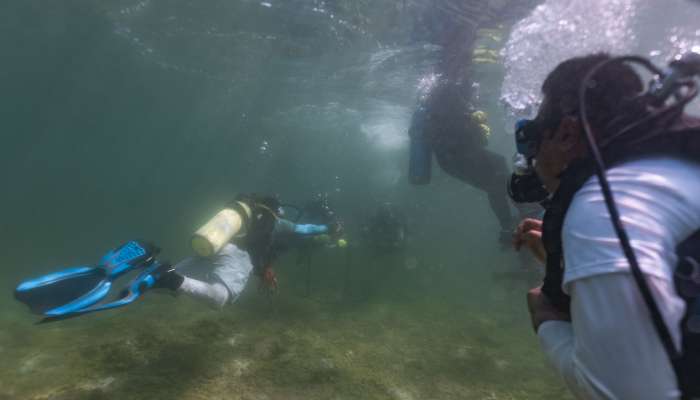
Muscat: The Environment Authority continues to strengthen efforts to protect marine ecosystems and biodiversity through ongoing coral reef cultivation projects aimed at rehabilitating damaged reefs, building new coral communities and implementing community initiatives and scientific surveys in response to environmental challenges, particularly climate change and rising temperatures.
These efforts contribute to supporting natural habitats for marine organisms, especially economically valuable species such as grouper fish.
Oman’s marine environment is characterised by unique coral diversity extending from Musandam Governorate to Dhofar Governorate, with distinctive coral communities of scientific importance that demonstrate resilience and adaptability to climate changes, including high temperatures, salinity and seasonal fluctuations.
Environmental studies and periodic surveys conducted by the Authority provide data on living coral cover, growth rates and the impact of coral bleaching, helping authorities make proactive protection decisions based on scientific evidence.
Eng. Ahmed bin Said Al Shukaili, Director of the Marine Environment Conservation Department at the Environment Authority, said challenges facing coral reefs include harmful human activities such as abandoned fishing nets and the use of anchors in coral reef locations, in addition to natural factors including tropical storms and the spread of crown-of-thorns starfish that feed on coral reefs.
He explained that among Oman’s most prominent coral reef destinations are the Daymaniyat Islands Nature Reserve, known for their dense biodiversity, and Musandam Governorate, particularly Khor Najd and Telegraph Island, which feature unique rock formations and branching coral reefs.
He added that coral reefs in the Al Hallaniyat Islands are distinguished by rare species and massive coral communities, while Bandar Al Khiran is considered an ideal destination for diving and snorkeling enthusiasts due to its accessibility and rich marine environment.
Al-Shukaili noted that the Authority is implementing an ambitious national project to restore Oman’s “blue forests” through direct coral reef cultivation in the Daymaniyat Islands Nature Reserve to establish an integrated ecosystem that ensures the sustainability of Oman’s marine wealth and biodiversity.
He stressed that coral reefs are not merely habitats for marine organisms but form the backbone of the marine food chain and serve as natural incubators supporting the survival and growth of economically valuable fish species, making their preservation both an environmental and economic necessity.
As part of the project phases, the Authority on Thursday launched a new stage involving direct coral reef cultivation in the Daymaniyat Islands Nature Reserve as a proactive intervention to protect marine ecosystems, strengthen resilience against climate challenges and preserve Oman’s unique biodiversity.
The project aims to rehabilitate damaged sites within the reserve, accelerate natural recovery using direct aquaculture techniques, enhance biodiversity, ensure sustainable fisheries and establish a scientific database through marine surveys to monitor coral growth and assess the impacts of climate change.
Al-Shukaili explained that the project relies on direct cultivation techniques where coral fragments are attached directly to hard rocky seabeds. Survey operations are conducted according to the International Maritime Organization survey strategy through 30-meter cross-sections distributed at five-meter intervals.
Sites are selected on the northern side of the islands, particularly Lagoon and Al-Ghurfa areas, at depths ranging between 5 and 12 metres to ensure sufficient light for photosynthesis and stable water currents.
For her part, Hanaa bint Saeed Al-Rawahi, marine life management specialist at the Environment Authority, said Oman has an advanced record in coral reef conservation projects.
She highlighted key initiatives including the “Coral Nursery” project at Jumeirah Muscat Bay, which has achieved high success rates in coral growth, the coral cultivation project in Musandam implemented in cooperation with local communities, and the artificial reef project in Al-Suwaiq, considered the largest of its kind in the region.
She also referred to initiatives by Petroleum Development Oman in cooperation with the Environment Authority to deploy artificial reef units along several coastal areas.
Al-Rawahi affirmed that the Authority continues efforts to enhance marine biodiversity, provide natural habitats for marine organisms, raise environmental awareness on the importance of coral reefs and support pioneering environmental projects through effective public-private partnerships.
She added that the coral cultivation project in the Daymaniyat Islands is being implemented in partnership with Sultan Qaboos University as the academic partner, with support from Oman LNG and participation of the Sea of Oman Diving Team.
The project aims to cultivate between 600 and 1,000 coral fragments using direct fixation techniques while relying on an integrated scientific methodology that studies environmental factors such as temperature, oxygen levels and acidity, alongside marine survey analyses to ensure high success rates and establish methodologies applicable to future initiatives.