Tuesday 07 / April / 2026
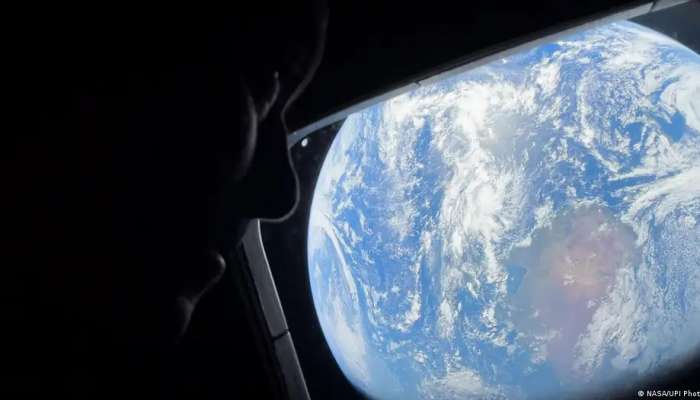
Florida: The astronauts on the Artemis II mission made history on Monday, reaching the farthest distance in space of any human, after surpassing the previous record set by the Apollo 13 mission in April 1970.
With just an hour before kicking off the fly-around and lunar observations, the spaceship was flying at 252,752 miles (406,764.9 kilometres), surpassing the distance record of 248,655 miles set by Apollo 13.
The Orion capsule had earlier on Monday reached the moon's gravitational sphere, meaning the spacecraft was more strongly affected by the moon's gravity than Earth's, NASA said.
The spacecraft came closest to the moon, about 7,500 kilometres beyond the far side.
The flight trajectory of the Artemis 2 flight resembled a figure of eight around Earth and the moon.
Why is the Artemis II mission historic?
When the spacecraft came closest to the moon, the astronauts were able to see Earth and the moon at the same time — and even a solar eclipse in which the Sun disappears behind the moon from Orion's perspective.
The astronauts entered what NASA calls the lunar sphere of influence at 0442 GMT on Monday and recorded the first lunar flyby since 1972, during which the crew travelled farther from our home planet than any human before.
This is the first time in more than 50 years that a crew, consisting of US astronauts Victor Glover, Christina Koch and Reid Wiseman and Canadian astronaut Jeremy Hansen, travelled to the moon.
Victor Glover became the first person of colour to ever fly around the moon, and Christina Koch the first woman.
What have the astronauts observed so far?
The astronauts were tasked with documenting the moon during the lunar flyby.
They started seeing features of the moon never before viewed with a naked human eye.
In the early hours of Sunday, NASA published an image taken by the Artemis crew that showed a distant moon with the Orientale basin visible.
"This mission marks the first time the entire basin has been seen with human eyes," the US space agency said.
“It is blowing my mind what you can see with the naked eye from the moon right now. It is just unbelievable,” Canadian astronaut Jeremy Hansen radioed. He challenged “this generation and the next to make sure this record is not long-lived.”
At one point, Koch reported an overwhelming sensation of emotion for a second or two while zooming in on the moon. “Something just drew me in suddenly to the lunar landscape and it became real,” she said.