Tuesday 31 / March / 2026
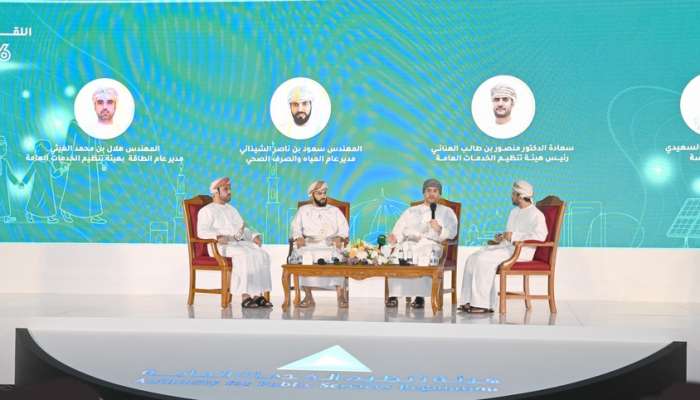
Muscat: The Authority for Public Services Regulation (APSR) said that the volume of investments in regulated sectors reached approximately OMR3.4 billion during the years of the 10th Five-Year Plan (2021–2025) and is set to increase to OMR8.8 billion during the 11th Five-Year Plan (2026–2030).
The Authority announced the implementation of three new strategic projects: the continuous renewable energy production project, battery energy storage systems (BESS), and demand response management, alongside the introduction of improvements to service assurance standards during 2026.
During its annual media briefing, the Authority explained that over the past five years, it has adopted an integrated regulatory system that included the issuance of 17 regulations, the granting of 14 licences, the provision of 14 exemptions, and the development of 15 frameworks for subscriber rights.
Additionally, the Authority approved six security and safety standards and eight standards to ensure grid reliability, reflecting its continuous efforts to develop public service sectors and enhance the quality of services provided to subscribers.
Dr. Mansoor Talib Al Hinai, Chairman of the Authority for Public Services Regulation, announced improvements to service assurance standards, which include doubling compensation when companies repeatedly fail to comply with the service levels provided to subscribers.
He emphasised that the Authority operates according to an integrated regulatory system based on the clarity of roles between policymakers, the regulator, and operators, thereby enhancing performance efficiency and consolidating governance principles in vital sectors.
He noted that planning within the Authority is carried out according to strategic integration between Oman Vision 2040, the five-year plans, and the Authority’s own strategy, ensuring that directions are transformed into projects and initiatives with a tangible impact. He explained that the pillars of work consist of system security, future foresight, beneficiary satisfaction, and spending efficiency.
Regarding growth indicators during the period (2021–2025), Al Hinai pointed out that the water and wastewater sector recorded a growth of 13 percent in water consumption and 12 percent in the number of subscribers.
The number of subscribers in the electricity sector rose by 14 percent, while consumption increased by 27 percent, reflecting the economic and urban expansion in the Sultanate of Oman.
He stated that within the framework of the transition to renewable energy, the proportion of renewable energy production reached 9.46 percent of total production by 2025, compared to 1.95 percent in 2021, with a production capacity covering the consumption of approximately 155,000 homes.
Dr. Mansoor Talib Al Hinai confirmed that the Authority for Public Services Regulation has achieved a complete digital transformation, with the digitalisation rate of services reaching 100 percent.
The transition to smart meters reached 99 percent in the water sector and 80 percent in the electricity sector, and the rate of actual readings reached 97 percent for electricity and 97.71 percent for water, contributing to improved data accuracy and an enhanced subscriber experience.
During the media meeting, Abdulaziz Khalfan Al Siyabi, Director of the Strategic Studies Department at the Authority, highlighted efforts to protect subscriber interests. He explained that over the past five years, the Authority has adopted a regulatory system that included the issuance of 17 regulations, the granting of 14 licenses, and the provision of 14 exemptions, in addition to developing 15 frameworks for subscriber rights, six security and safety standards, and eight grid reliability standards.
Regarding oversight, he noted the implementation of comprehensive audit programs on companies in regulated sectors, covering meter reading procedures, billing, subscriber rights, and service disconnection and reconnection procedures. This also included the implementation of the "Secret Shopper" programme to ensure service quality, where the targeted compliance rate for 2025 was approximately 95 percent, while the actual compliance rate reached 96 percent.
He also noted progress in protecting subscribers through digital platforms, with a 99 percent completion rate for the "Hasil" platform and 100 percent for the "Tajawub" platform, handling more than 7,000 complaints during 2025.
He stated that approximately OMR153,000 was provided in compensation paid to more than 9,000 subscribers, while the satisfaction rate regarding company performance rose to 75 percent.
The average period required for service connection reached 1.17 days for the electricity sector and 6 days for the water sector.
Furthermore, he added that the Omanisation rate in sector companies reached 98.55 percent, and 78 percent in permanent contract companies, with the number of new jobs created in the basic services sector during 2025 reaching approximately 2,050.
He added that total spending on small and medium enterprises (SMEs) rose by 80 percent to reach OMR119 million compared to OMR66 million in 2024.
The contribution of In-Country Value (ICV) also rose by 35 percent to reach OMR50 million during 2025 compared to OMR37 million in 2024.
Eng. Alaa Hassan Musa Al Lawati, CEO of Nama Electricity Distribution, reviewed developments in the electricity sector, where strategic projects in generation and the transition toward renewable energy were implemented, with the production percentage reaching 9.46 percent in 2025.
In the electricity transmission sector, he stated that line lengths increased by 40 percent and the number of stations increased by 13 percent. Indicators for the distribution sector showed an increase in network lengths by 13 percent and an 8 percent increase in the number of stations. The supply sector witnessed a digital transformation in billing from 90 percent in 2021 to 100 percent in 2025, with electronic payment rates rising to 78 percent during the 2021–2025 period.
He noted that artificial intelligence and data analysis technologies were employed to improve the subscriber experience, enabling them to monitor their consumption in real-time via smart meters.
This was in addition to several projects, including improving call center services, developing electronic services, simplifying and accelerating bill payment procedures, enhancing electronic linking with government entities, a load-shedding project to raise grid efficiency, improving the subscriber satisfaction measurement system, and updating the electronic portal and applications to provide integrated services.
In the gas transmission sector, Eng. Alaa Hassan Musa Al Lawati explained that a 3 percent growth in network capacity was recorded, along with a 5.9 percent increase in pipeline lengths and a 22 percent rise in the volume of transported gas.
This was accompanied by the implementation of expansion projects, the enhancement of safety standards, and business continuity.
She noted that expansion projects for gas transmission networks included the construction of the second 42-inch diameter line between Fahud and Sohar, the gas supply project for the Marsa LNG company, the project linking the gas network (SGL) belonging to (SOGL) with the gas network, and the development of standards to enhance the security of the gas transmission network.
Other initiatives included a project to follow up on recommendations related to business continuity, a study to enhance the Regulatory Asset Base (RAB) framework in line with multi-provider opportunities, and a project for the expansion of the water and wastewater sector and service quality improvement.
Meanwhile, Eng. Qais Saud Al Zakwani, CEO of Nama Water Services, reviewed developments in the water and wastewater sector, which witnessed a 32 percent growth in network lengths and a 9 percent increase in the number of stations, with the sewage treatment rate reaching 98 percent.
He stated that the number of water quality tests rose by 74 percent, and the compliance rate with Omani drinking water standards reached 99.81 percent, reflecting an advanced level of water quality monitoring.
Al Zakwani noted that the number of projects under implementation reached 97 projects with a total value of approximately RO 966 million, enhancing service expansion and efficiency. The sector also saw progress in digital transformation by increasing the accuracy of readings and reducing estimated readings.
Hassan Mohammed Al Lawati, Director General of Economic Regulation and Markets at the Authority, reviewed the volume of investments in regulated sectors during the period (2021–2025), which reached approximately RO 3.4 billion. This was distributed as RO 1.7 billion in the electricity sector, RO 1 billion in the water sector, and approximately RO 300 million in the gas transmission sector. He stated that the volume of investment will increase during the period 2026–2030 to reach RO 8.8 billion, distributed as RO 7 billion in the electricity sector, RO 500 million in the natural gas transmission sector, and RO 1.3 billion in the water and wastewater sector.
Hassan Mohammed Al Lawati reviewed future projects, including the continuous renewable energy production project, which relies on providing electricity production from renewable sources operating around the clock, contributing to the stability and sustainability of the energy system. This is in addition to battery energy storage projects that rely on advanced electrical battery systems to store electricity during periods of low demand—especially energy produced from renewable sources—and then re-injecting it into the electrical grid during peak times to enhance load management efficiency and grid stability.
He also reviewed the demand response management project, which will be implemented in cooperation with major subscribers by applying advanced operating mechanisms and integration methodologies with the existing electrical system, allowing for the control of electrical loads during peak times and contributing to increased energy efficiency and reduced pressure on the grid.
The Director General of Economic Regulation and Markets at the Authority for Public Services Regulation noted that these projects represent a strategic direction toward enhancing the sustainability of the energy sector, raising its operational efficiency, and supporting the transition toward an energy system that is more flexible and responsive to future changes.