Saturday 14 / February / 2026
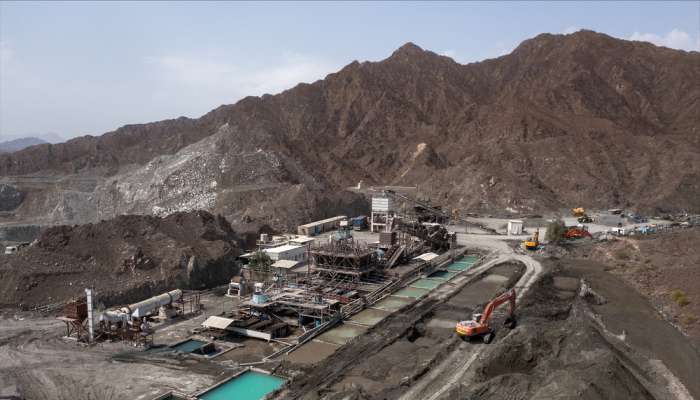
Muscat: The Ministry of Energy and Minerals is paying attention to regulating the exploitation of chromium ore by allocating mining concession areas or mining licenses according to clear technical and geological bases.
This is being done in order to ensure the efficiency of exploitation and the sustainability of the resource, in addition to supporting investments related to the chromium value chain, in line with the objectives of the “Oman 2040” vision to maximise local added value and achieve sustainable development.
Engineer Saud bin Khamis Al Mahrouqi, Director General of Minerals at the Ministry of Energy and Minerals, confirmed that efforts are continuing to develop the production of chromium ore in accordance with the best practices adopted in the mining sector, with a focus on enhancing exploration and development work related to this mineral.
He said to the Oman News Agency that the current trend focuses on maximising the local added value of chromium ore, whether through raising the quality of the product or expanding the manufacturing associated with it.
He further noted that the export of chromium ore will be organised through the Metals Trading Company, which will contribute to supporting the local added value and sustainability of chromium mining and enhancing the position of the Sultanate of Oman as a promising regional centre in the long term.
He explained that chromium ore in the Sultanate of Oman is produced according to operational plans that take into account the sustainability of natural resources and the requirements of demand in global markets.
The total quantity of chromium ore production in the Sultanate of Oman during the year 2025 amounted to about 353,538 tonnes, with sales of about 387,995 tonnes, He further added that the total value of sales exceeded OMR15 million.
He explained that the majority of the production is exported through Omani ports to a number of foreign markets, especially to the continents of Asia and Europe.
He said that the focus is on improving the quality of the raw material and organising marketing and exports through a metals trading company. This will contribute in achieving higher economic returns and enhancing the competitiveness of the Oman’s mining sector at the regional and international levels.
He pointed out that the Sultanate of Oman has good potential for the chromium industry, starting from geological resources, through infrastructure and organisation, to advanced manufacturing opportunities to maximise economic benefit and enhance its position in the global metals market.
He said that chromium ore in the Sultanate of Oman is found within the geological formations associated with the ophiolite belt, which are parts of an oceanic crust rich in ultrabasic rocks that were pushed over the continental crust during ancient tectonic processes. It is considered the largest and most important ophiolite belt in the world.
He explained that these formations are characterised by the presence of chromium ore in ultra-basic rocks, and that geological studies and exploration work that has been ongoing for decades have contributed to identifying many sites rich in this ore in the Sultanate of Oman. It is often found in the form of clusters or units within ultrabasic rocks.
The Director General of Minerals at the Ministry further pointed out that mineral deposits are widespread in the mountains of Oman.
This extends from the Wilayat of Shinas to the Wilayat of Wadi Bani Khalid, passing through the Wilayats of Al Buraimi, Sohar, Al Rustaq, Samail and other Wilayats. The number of chromium quarries in the Sultanate of Oman currently stands at 29 quarries operating within regulatory and legislative frameworks. He emphasised that there is increasing interest in exploration in these areas or other areas along the Omani Hajar Mountains, which enhances opportunities for expansion in mining activity and the sustainability of chromium ore resources.
Chromium is an important mineral in the Sultanate of Oman, both economically and industrially, due to its multiple uses in heavy and advanced manufacturing industries, and the investment opportunities it provides that contribute to enhancing the returns of the mining sector.
The importance of chromium is highlighted by its being a basic material for a number of strategic industries, most notably the stainless steel and metal alloy industries, which enhances its role in supporting industrial and export activities.
The availability of chromium ore locally contributes to reducing dependence on imports, improving the efficiency of industrial supply chains, and opening up prospects for expansion in related manufacturing industries, thereby supporting the competitiveness of the mining sector and enhancing its contribution to the national economy in the medium and long term.
Omani companies also play a major role in chrome mining, focusing on exploration, production and export. Among these companies is the Oman Chrome Company, which was established in 1991 and carries out extraction, transportation and quality improvement operations.
Chromium is considered an economically important mineral resource in the Sultanate of Oman, given its role in supporting the minerals sector, which is relied upon as one of the sectors in diversifying sources of income. At the forefront of this interest is raising the local added value by raising the quality and producing ferro-chrome in smelting plants instead of exporting the raw material.
Chromium is of great industrial importance due to its physical and chemical properties; it is widely used in the manufacture of stainless steel and ferro-alloys to increase corrosion resistance and hardness, and in the chemical industries to produce pigments, paints, ceramics and plastics, in addition to the thermal industries as furnace linings and heavy equipment.
He further added that the Ministry of Energy and Minerals continues its efforts to develop chromium production and enhance its added value in accordance with best global practices, which contributes to achieving sustainable development and enhancing the Sultanate of Oman’s position as a promising regional centre for investment in the mining sector.