Friday 23 / October / 2026
Relations between Pakistan and Afghanistan have hit a historic low in recent months, after deadly cross-border clashes that left dozens of people killed.
Important trade routes like Torkham and Chaman have since been closed. This has crippled trade, spiked prices and deepened the rift.
The closure of Pakistan's border crossings with Afghanistan has also triggered a significant realignment in regional trade patterns, with India emerging as the primary beneficiary.
Pakistan-Afghanistan border crisis reshapes regional trade
The conflict between Pakistan and Afghanistan has seen trade between the two neighbors collapse by nearly half.
Bilateral commerce grew by 25% in the fiscal year 2024-25, reaching nearly $2 billion (€1.88 billion), according to multiple media reports in both countries.
But with the border closures and military tensions, that has fallen to around $1 billion, Khan Jan Alokozay, a board member of Afghanistan's Chamber of Commerce, told Amu TV. It is a hugely impactful loss for a country whose exports were worth $992 million, and whose imports totaled $5.76 billion in 2022, according to the World Trade Organisation (WTO).
Afghanistan pivots towards India
With this critical commercial relationship severely disrupted, Afghanistan — largely shunned by the international community since the Taliban returned to power — is actively seeking alternative trade routes.
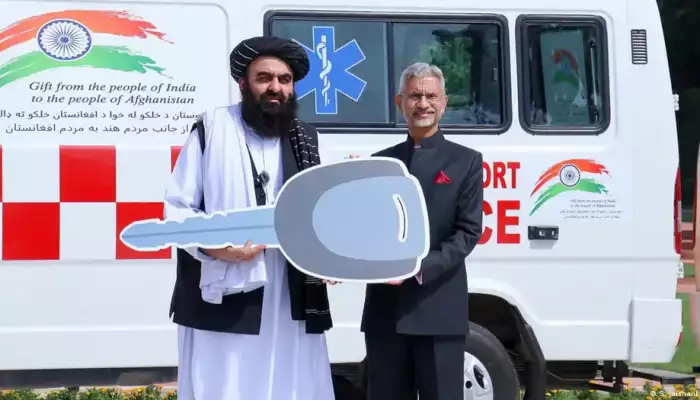
New Delhi has moved to position itself as the solution.
Afghan Commerce Minister Nooruddin Azizi recently traveled to New Delhi to negotiate expanded economic ties, including increased cargo flights to Kabul from Indian cities like Delhi, Amritsar, and Mumbai. Both sides also appointed trade attachés to their respective embassies to oversee and facilitate bilateral commerce.
The discussions focused on tariff reductions, tax exemptions and a bilateral trade target of $1 billion, signalling Afghanistan's intent to fundamentally restructure its commercial relationships away from Pakistani ports and border crossings.
Chabahar, India's strategic gateway
Central to India's approach is Chabahar port in Iran, which provides landlocked Afghanistan with access to international waters — without having to cross Pakistani territory.
India is investing heavily in the port, which serves as a pivotal sea route that bypasses Pakistan, facilitating essential imports for Afghanistan.
Since relations between Pakistan and Afghanistan soured, Afghan traders have been shifting to use the port to import food, commodities, construction materials and consumer goods, essentials that previously came through Pakistan.