Monday 15 / December / 2025
Muscat: The Ministry of Heritage and Tourism, in cooperation with a Czech-American archaeological mission from the University of Utah and the Czech Academy of Sciences, has launched the second season of excavations at the Al-Khashbah site in the Wilayat of Al Mudhaibi.
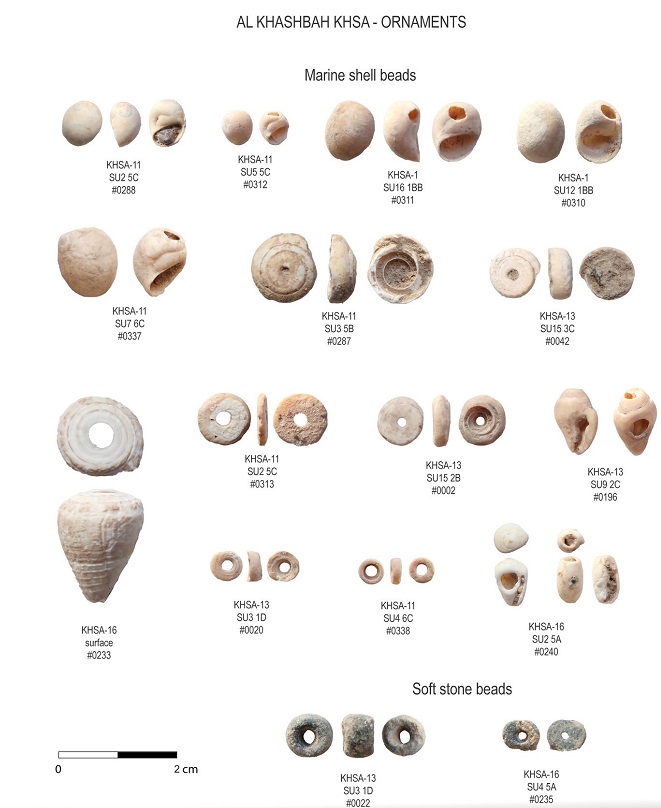
Al-Khashbah is regarded as one of the largest Late Stone Age sites in the region. The site contains extensive stone-tool production workshops and multiple hearths, providing rare insights into prehistoric life in the Arabian Peninsula.
The joint mission is utilizing advanced technologies to uncover and accurately date archaeological remains, with the aim of enhancing understanding of ancient human settlement patterns, mobility, and adaptation strategies in arid desert environments.
The excavation forms part of a broader national initiative to explore and preserve Oman’s archaeological heritage.
According to the Ministry of Heritage and Tourism, a total of 38 archaeological missions are active across the Sultanate during the 2025/2026 season. These include missions from Oman (1), Italy (9), France (5), the United States (4), Japan (2), Germany (2), and the Czech Republic (2), in addition to several joint missions such as Czech-American, Omani-French, Omani-Italian, and Omani-British collaborations.
Research projects are distributed across multiple governorates, with Dhofar hosting the highest number at eight projects, followed by Al Dakhiliyah and South Al Batinah with four projects each. Other missions are spread across Muscat, Al Wusta, North and South Al Sharqiyah, and North Al Batinah.
This growing international engagement highlights Oman’s importance as a key location for studying human history and prehistoric adaptation in the Arabian Peninsula.