Monday 09 / November / 2026
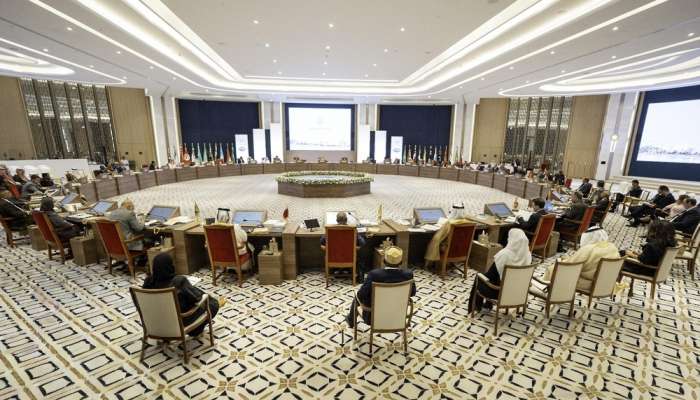
Muscat: The proceedings of the 125th ordinary session of the Executive Council of the Arab League Educational, Cultural and Scientific Organization (ALECSO) commenced today in Muscat. The Sultanate of Oman is hosting the two-day session with the participation of representatives of the 22 Arab member states and representatives of the General Secretariat of the Arab League.
The session is being held in preparation for the 28th session of the Organization's General Conference, scheduled for 12 November.
The Executive Council is discussing a number of items on its agenda. Prominent among these are the Director-General's report on the implementation of the Organization's programmes and activities for 2025, the strategic plans for international cooperation and partnerships, enhancing the role of media and marketing, the comprehensive strategy for capacity-building of the Organization's staff and its external centres, as well as the educational, cultural, and scientific conditions in Palestine and in countries affected by crises, disasters, and emergencies, and a number of administrative and financial matters.
Hani Muqbil Al Muqbil, Chairman of the Executive Council of ALECSO, affirmed in his address at the opening of the session that the Council witnessed, during the previous period chaired by the Kingdom of Saudi Arabia, a number of transformations. Prominent among these were the expansion of member state participation and the increase in proposals and initiatives submitted, which reached 34, reflecting the growing interaction and participation among member states.
For his part, Raed Ali Saleh Al Jubouri, Director of the Department of Arab Organizations and Unions at the General Secretariat of the Arab League, expressed his gratitude to the Sultanate of Oman for its continued support of the Arab League and its specialized organizations. He commended ALECSO's efforts in preparing for this session under the current exceptional circumstances and called on the competent authorities in Arab states to benefit from the programmes and activities offered by the Organization.
Professor Dr. Mohamed Ould Amar, Director-General of ALECSO, reviewed the Organization's most prominent programmes and initiatives in the fields of education, culture, and science. In the educational field, he addressed the development of educational thought and the launch of the Second Arab Decade for Literacy. In the cultural field, he touched on initiatives for safeguarding intangible cultural heritage, the Arab Capital of Culture in the State of Kuwait, and youth empowerment.
In the field of science and research, he reviewed a number of topics, including the Arab Strategy for Research, the ALECSO Science Portal, and support for startups.
He expressed his condemnation of the attacks to which a number of Arab states are being subjected and the ongoing violations against the Palestinian people and their deprivation of the right to education. He announced an integrated initiative to support countries experiencing exceptional circumstances and emergencies, and reviewed the efforts of the Organization's external centres and institutes.
The Council discussed a number of proposals submitted by member states. These included Libya's proposal to select the city of Tripoli as the Capital of the Arab Child for 2027, the Lebanese Republic’s proposal regarding the draft Arab Strategy for Persons with Disabilities, and the State of Palestine's proposal regarding the twinning of Jerusalem as the Capital of the Arab Child with the launch of an Arab Capital of the Child.
The Council also discussed the Kingdom of Saudi Arabia's proposals concerning the Unified Arabic Terminology Dictionary platform, the linguistic policy system in Arab states, and the Kingdom of Saudi Arabia Award for Heritage.
It is worth noting that ALECSO was founded on 25 July 1970 and is one of the specialized organizations affiliated with the Arab League. It has 22 Arab member states and aims to advance the education, culture, and science sectors and to enhance coordination and cooperation among member states in these fields. The Sultanate of Oman joined its membership in 1973.