Sunday 01 / November / 2026
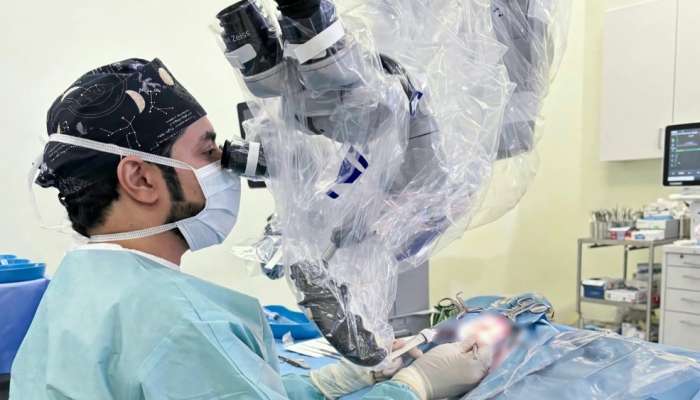
Muscat— The Otology and Ear Surgery team at the University Medical City has successfully performed the first middle ear hearing implant surgery in the Sultanate of Oman. The two-hour operation contributed to restoring hearing for a female patient suffering from progressive sensorineural hearing loss.
Over recent years, the patient experienced a gradual decline in her auditory capability, with medical examinations revealing medium to severe sensorineural hearing loss. Despite previously utilizing conventional hearing aids, she did not achieve the desired benefit, necessitating a comprehensive medical and audiological evaluation to determine appropriate treatment options.
Following a thorough study of the case, the patient was identified as a candidate for a middle ear hearing implant, which is an advanced auditory rehabilitation solution for patients who do not derive adequate benefit from conventional hearing aids. The operation was successfully performed several weeks ago, followed by the activation of the external processor, enabling the patient to regain hearing to exceptional levels, alongside a noticeable improvement in her ability to distinguish sounds and understand speech, even in crowded environments and large gatherings.
The surgery was performed by the Otology and Ear Surgery team led by Dr. Khalid Said Al Zaabi, Senior Consultant Otologist at Sultan Qaboos University Hospital in the University Medical City, in a step reflecting the advanced level of specialized services provided by the city in treating and rehabilitating hearing disorders, as well as the competence of national cadres.
Al Zaabi told Oman News Agency (ONA) that the significance of performing such operations lies in providing an excellent alternative and a more effective conduction option than conventional hearing aids. It allows for immediate and long-term benefit while bypassing the outer ear, thereby reducing issues related to wax accumulation in the ear canal caused by wearing conventional hearing aids.
He explained that the main challenge in conducting this type of surgery lies in the small size and precision of the implanted components and devices. Fitting the hearing implant onto the ossicles inside the middle ear requires high skill and precision, while ensuring the preservation of the ossicular chain connection without affecting the smoothness of its natural movement.
He added that the primary criterion for determining a patient's eligibility for this type of device depends on the nature of the hearing loss—whether conductive, sensorineural, or mixed (combining both types)—and verifying the integrity of the middle ear and the presence of the ossicles through CT scans. Furthermore, the patient undergoes audiological examinations and trials of the device prior to the operation to ensure its suitability for their condition and their ability to benefit from it.
This achievement comes as an extension of the University Medical City's journey in developing hearing implant programs, having previously launched the bonebridge implant and cochlear implant programs years ago, culminating in the middle ear hearing implant. This underscores its continuous commitment to adopting the latest medical technologies and providing advanced therapeutic options for patients.
This success reinforces the capabilities of the University Medical City in handling various types of hearing loss and associated surgical interventions, contributing to raising the efficiency of provided healthcare services and expanding specialized care for the community, while confirming its standing as a leading center in diagnosing, treating, and rehabilitating hearing problems in the Sultanate of Oman.




