Friday 23 / October / 2026
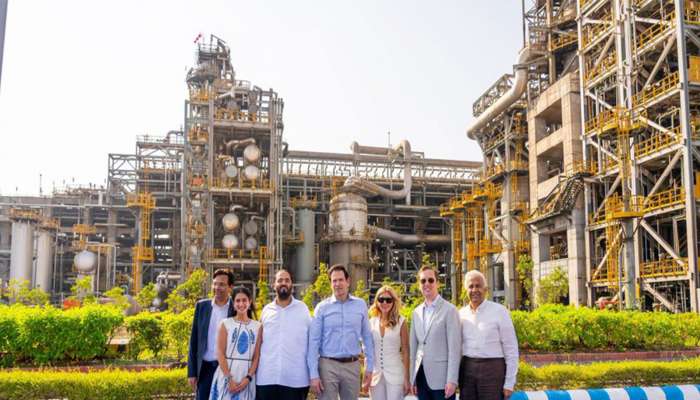
US Secretary of State Marco Rubio’s visit to India’s financial hub Mumbai and the western city of Jamnagar has highlighted energy cooperation as a key area of common interest between Washington and New Delhi, even as disagreements over trade, immigration and tariffs continue to strain bilateral relations.
During his October 20-21 visit, Rubio indicated that Reliance Industries, India’s largest private-sector company, could increase purchases of Venezuelan crude oil as supplies become more widely available. The company operates the Jamnagar refinery complex in Gujarat, the world’s largest single-site oil refining facility.
“India is a refining superpower. They have the capability to refine heavy crude,” Rubio told reporters in Mumbai on Tuesday, adding that Indian refiners had processed such oil in the past and could do so again as Venezuelan supplies increase.
Rubio met Indian External Affairs Minister Subrahmanyam Jaishankar in Mumbai as both countries sought to strengthen energy ties and make progress towards a comprehensive trade agreement. The discussions followed an interim trade framework reached in February.
“We’re very, very close. I would say we’re about as close as you can be without having executed the agreement,” Rubio said, expressing optimism about the negotiations.
However, the broader trade deal remains stalled amid uncertainty over the legal status of US tariffs, India’s demand for preferential rates compared with competitors such as Vietnam, and Washington’s push for greater access to India’s agriculture and dairy markets.
Analysts said Rubio’s decision to visit Mumbai and Jamnagar while bypassing New Delhi reflected the Trump administration’s increasingly transactional approach to relations with India, with a stronger emphasis on commercial agreements, investment and energy security.
Soumen Ray, a former Indian diplomat, described the itinerary as a commercially focused visit, noting that Jamnagar’s refining capacity of around 1.4 million barrels per day makes it a significant destination for discussions on global oil supplies.
The visit comes amid disruptions to international energy markets, including Ukrainian drone attacks on Russian oil infrastructure and the impact of the war involving Iran on fuel prices and global supplies.
US President Donald Trump has linked rising domestic fuel prices to disruptions in oil refining. Against this backdrop, Washington is seeking markets for its energy exports, while India remains dependent on imported crude to meet its substantial domestic demand.
India is the world’s third-largest oil importer and an important exporter of refined petroleum products. Its refining industry can process different grades of crude, giving the country flexibility in sourcing supplies from multiple producers.
Uday Chandra, a political science professor at Ashoka University, said the visit reflected the commercial priorities of India-US relations under the Trump administration.
“India needs secure, affordable energy supplies, while the US seeks large markets for its oil and gas and greater investment in its energy infrastructure,” he said, pointing to the complementary interests of the two countries.
Investment is another important dimension of the relationship. Reliance Industries has invested at least $100 million in America First Refining, a Texas-based start-up associated with plans to build a major new refinery at the Port of Brownsville. Trump announced a proposed $300 billion partnership involving the project in March 2026.
Srinivaasan Balakrishnan of the Delhi-based Indic Researchers Forum said the focus had shifted towards capital, refining capacity and commercial agreements, where companies could advance projects more quickly than traditional diplomatic channels.
The visit also followed controversy over Elon Musk’s criticism of Reliance chairman Mukesh Ambani regarding Starlink’s entry into India.
Meanwhile, Washington recently suspended a threatened tariff measure targeting major buyers of Russian oil, including India and China, offering temporary relief to New Delhi.
Analysts said energy and investment could provide a practical foundation for cooperation even as differences persist over other policy issues. While the relationship remains transactional, commercial interests offer both countries opportunities to maintain engagement without resolving every political disagreement.