Tuesday 13 / October / 2026
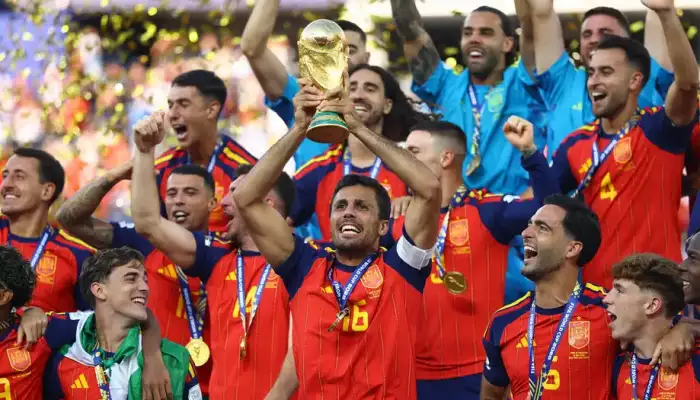
For decades, football has been celebrated as the ultimate unifier—a sport capable of pausing conflicts and bridging cultural divides. Yet, as the final whistle blew at the FIFA World Cup 2026 final, it became undeniable that the beautiful game can no longer be separated from the harsh realities of global politics. The pitch in 2026 wasn't just a battleground for a trophy; it became a mirror reflecting a deeply fractured world.
A Heartbreaking Farewell to the Albiceleste
For me, and millions of fans globally, supporting Argentina was a lifelong romance. My loyalty stretched across generations, from the legendary exploits of Mario Kempes in 1978 to the fairytale coronation of Lionel Messi in 2022.
To be clear, my admiration for Lionel Messi remains unchanged—he is, without a doubt, the greatest player to ever grace the game so far. But football teams do not exist in a vacuum; they represent nations, regimes, and geopolitical stances. Following the Argentine government’s overt alignments and unwavering support for Israel amidst the ongoing crisis and devastating humanitarian toll in Gaza, a profound shift occurred.
While I still love Messi the individual, I can no longer support the team he represents. My loyalty to the Albiceleste has officially ended. From now on, my allegiance lies firmly with Spain. For many of us—including a vast circle of my own friends and peers—cheering for Argentina became impossible when the jersey became tied to a regime's political stance.
A Final Defined by Geopolitics
The day of the final made these geopolitical fault lines glaringly obvious. The pre-match atmosphere was charged not just with sporting anxiety, but with political symbolism. Images circulated globally of the Argentine ambassador presenting a national jersey to Benjamin Netanyahu, securing the passionate backing of Israel for Argentina. Meanwhile, political figures like U.S. President Donald Trump weighed in, further solidifying the Western political alignment behind the South American squad.
Concurrently, the hearts of Palestinians, and millions of people worldwide who stand against the tragedy in Gaza, beat firmly for Spain. Spain’s courageous, principled diplomatic stance in defense of human rights and Palestinian statehood transformed La Roja into more than just a football team. They became the standard-bearers for a global conscience.
A Masterclass on the Grass: Viva España
When the referee blew the starting whistle, the narrative shifted from political tension to absolute sporting brilliance. Spain did not just win; they dominated.
For one hundred twenty minutes, the world witnessed a tactical masterclass that heavily echoed Spain’s historic 2010 World Cup victory against the Netherlands. They controlled the tempo, suffocated their opponents' creativity, and dictated the rhythm of the game with flawless precision. Argentina, despite their pedigree, had no answers for the relentless Spanish press and fluid passing.
Spain proved that you can carry the moral weight of global expectations and still deliver perfection on the pitch.
The New Team of the World
The 2026 World Cup final proved that the "spirit of the game" is no longer just about kicking a ball—it is about what a country stands for when the world is watching.
By alignment of principle and sheer athletic dominance, Spain has captured the imagination of a new generation of fans. They are no longer just champions of Europe or champions of the world; they are the team of the global collective conscience.
Congratulations, Spain. Viva España.