Thursday 25 / June / 2026
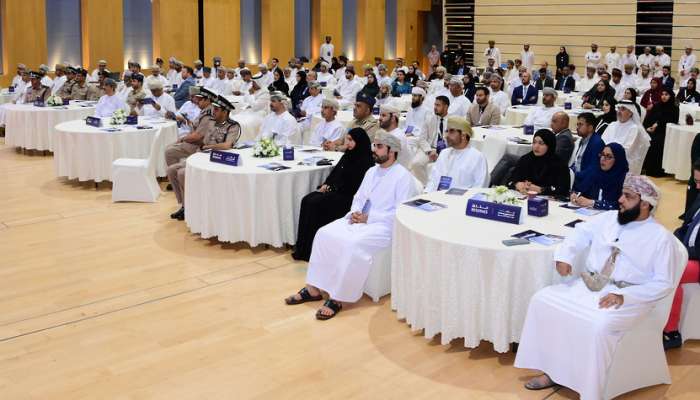
Muscat--- The Civil Aviation Authority (CAA) today organized the Advanced Air Mobility (AAM) Forum under the theme “From Vision to Safe and Sustainable Operations within the National Aviation Strategy 2040”.
The event saw the participation of more than 150 attendees representing over 40 entities, including government entities, military and security agencies, as well as representatives of the aviation sector, operators, technology solution providers, Omani companies, investors, and industry partners, in addition to universities, colleges, and youth interested in future technologies.
The forum comes as part of the Authority’s efforts to support the objectives of Oman Vision 2040 and the National Aviation Strategy 2040, and to enhance the Sultanate of Oman’s readiness to keep pace with the rapid global transformations in the aviation sector.
It also aims to enable the Advanced Air Mobility ecosystem in a way that supports innovation, sustainability, and economic diversification.
Eng. Naif Ali Al Abri, Chairman of the Civil Aviation Authority, stated in his opening speech that Advanced Air Mobility is no longer a distant future concept, but has become a clearly defined national pathway and a modern economic sector through which the Sultanate of Oman seeks to be at the forefront of global transformation.
He noted that this direction reflects the objectives of Oman Vision 2040 and the priorities of the National Aviation Strategy 2040, which established Advanced Air Mobility as a standalone national program.
He added that the Civil Aviation Authority undertakes a pivotal role in enabling this sector by developing regulatory and legislative frameworks, strengthening safety and security, and fostering an environment that supports innovation and investment.
Al Abri affirmed that the Sultanate of Oman is adopting a gradual and structured approach to implementation, beginning with the establishment of the regulatory framework, followed by the development of unmanned air traffic management systems, and progressing towards safe and sustainable phased deployment of these technologies.
The forum discussed several key themes related to Advanced Air Mobility, including the Foundational Charter and National Roadmap, the role of the Civil Aviation Authority from regulation to operations, operational applications and economic feasibility, national capacity building and value chain development, as well as opportunities and challenges associated with this promising sector.
The event also featured two panel discussions addressing the future of Advanced Air Mobility in the Sultanate of Oman. The first session focused on the transition from regulatory frameworks to operational implementation, including safety and security requirements, testing environments, and airspace integration, in addition to exploring priority use cases, economic viability, and investment and partnership opportunities.
The second session focused on national capacity building and value chain development, highlighting the National Program Roadmap, skills development, training and certification, and the role of partnerships with academic institutions and the private sector. It also emphasized the importance of engaging stakeholders, operators, and youth to enrich implementation and define priority use cases.
An accompanying exhibition was held as a part of the forum, featuring participation from several local and international specialized companies, showcasing the latest technologies, innovative solutions, and smart systems related to drones and Advanced Air Mobility.
The exhibition provided participants with the opportunity to explore the latest technological developments and practical applications supporting the future of the aviation sector.
The forum also witnessed the signing of several agreements and Memoranda of Cooperation aimed at supporting the Advanced Air Mobility ecosystem in the Sultanate of Oman and enhancing the sector’s readiness to keep pace with future transformations in aviation and modern aerial technologies.
A Memorandum of Cooperation was signed between the Civil Aviation Authority, the Ministry of Transport, Communications and Information Technology, and the Ibn Firnas Center for Unmanned Aircraft, aiming to strengthen institutional integration in the development of drone and Advanced Air Mobility systems in Oman. This includes supporting innovation, enabling operational trials, and developing national capabilities in unmanned aircraft systems, in line with national aspirations for a more efficient and sustainable digital and logistics economy.
In addition, the Foundational Charter for the Advanced Air Mobility System in the Sultanate of Oman was signed, representing a foundational framework that brings together government entities, the private sector, and strategic partners within a unified national AAM ecosystem. It aims to define shared principles, partner roles, and governance and coordination mechanisms, ensuring the development of a safe, regulated, and sustainable sector, and paving the way for a new phase of innovation in aviation and smart mobility.
Furthermore, the Civil Aviation Authority signed a Memorandum of Cooperation with ITAérea Aeronautical Business School, a leading global institution in aviation management and specialized education. The agreement aims to enhance cooperation in national capacity building and the development of specialized competencies in Advanced Air Mobility and unmanned aerial systems, leveraging the institution’s specialized academic and executive programs in modern aviation disciplines.
These agreements and initiatives reflect the national direction towards developing an integrated Advanced Air Mobility ecosystem in the Sultanate of Oman, enhancing sector readiness, supporting innovation and investment, and reinforcing Oman’s position as a promising regional hub for drones, smart mobility, and future aviation technologies.
The forum also marked the launch of the Espar Summer Academy for Drones, dedicated to school students. The program aims to introduce participants to the world of drones and develop their skills through specialized training and practical modules.
The program includes training on drone operation fundamentals and assembly, safety principles and regulatory frameworks, as well as software and technologies used in the field, contributing to the development of technical skills and encouraging interest in future aviation and innovation-related technologies.
The Advanced Air Mobility Forum serves as a national platform that brings together government entities, the private sector, academic institutions, experts, and stakeholders, with the aim of strengthening partnerships, exchanging expertise, and exploring the future of this sector. It contributes to reinforcing the Sultanate of Oman’s position as a regional hub supporting innovation and advanced technologies in civil aviation.