Sunday 26 / July / 2026
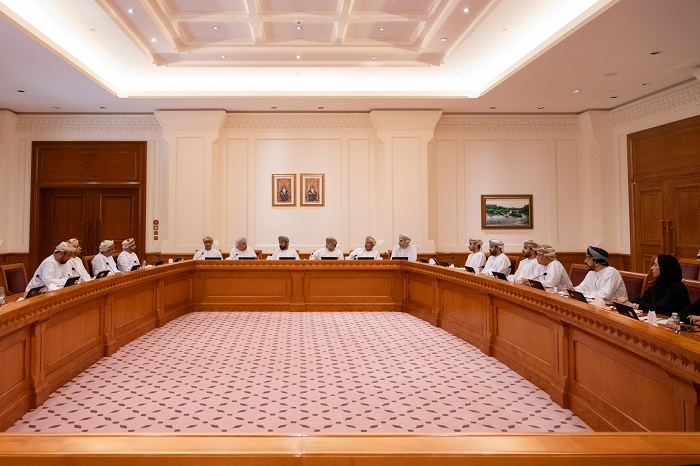
Muscat: The Economic and Financial Committee of the Shura Council hosted on Monday Eng. Abdulrahman Salem Al Hatmi, Chief Executive Officer of Asyad Group, along with a number of the Group’s specialists, as part of its discussion on measuring the economic progress achieved under the Logistics Strategy 2040.
The meeting focused on reviewing key indicators, programmes, and projects being implemented by the Group to support the objectives of the logistics sector and enhance its contribution to the national economy.
At the outset of the meeting, Ahmed Said Al Sharqi, Head of the Committee, welcomed the CEO of Asyad Group and the accompanying delegation.
He highlighted the pivotal role played by the Group and its subsidiaries in strengthening Oman’s transportation and logistics ecosystem.
He emphasised that the logistics sector remains a key government priority, serving as a major enabler of economic diversification and a fundamental driver for numerous productive and service sectors targeted for development under Oman Vision 2040.
Such efforts, he noted, contribute to enhancing the competitiveness of the national economy, attracting investments, and creating employment opportunities.
During the meeting, representatives of Asyad Group delivered a presentation outlining the Group’s strategic role in supporting the national economy.
The presentation provided an overview of Asyad’s diverse business portfolio, which includes maritime transport, ports and free zones, integrated logistics services, land transport, postal services, and dry dock operations.
It also highlighted the Group’s international presence and extensive business network spanning several global markets, as well as its role in delivering integrated logistics solutions across various stages of supply chains and logistics services.
The presentation further underscored the economic significance of integrated logistics services and their contribution to positioning Oman as a regional logistics hub linking the Indian subcontinent, East Asia, the Arabian Gulf, Africa, and Europe.
It also highlighted the sector’s role in facilitating global trade through Omani ports, increasing value-added activities within free and economic zones, attracting international consolidation and distribution centers, improving supply chain efficiency, and maximising the benefits of Oman’s strategic geographic location.
The meeting witnessed extensive discussions between committee members and representatives of Asyad Group on several issues related to the development of the national logistics sector.
Members emphasised the importance of expanding local ports and strengthening their economic and commercial roles as complementary facilities to the major ports of Salalah, Duqm, and Sohar.
Such expansion, they noted, would improve cargo handling and distribution efficiency while enhancing integration among logistics facilities across the governorates.
Committee members also reviewed Asyad Group’s strategy for the future development of Sohar Port, including related investment and operational programmes.
Discussions focused on the port’s continued growth in commercial, industrial, and logistics activities and its critical role in serving local and regional markets, promoting trade, and supporting re-export activities.
The meeting also addressed the Sohar–Abu Dhabi railway project being developed by Hafeet Rail.
Participants reviewed the project’s anticipated impact on strengthening logistics connectivity between the Sultanate of Oman and the United Arab Emirates, as well as its role in enhancing the competitiveness of Sohar Port through its linkage with Khalifa Port.
The project is expected to foster greater integration among transport modes, reduce freight transit times and costs, strengthen regional land freight movement, and facilitate increased trade and investment flows between the two countries.
Discussions further explored the cost of land freight transport and the challenges associated with the sector, particularly issues related to border-crossing procedures, transit operations, and the efficiency of supporting services.
Committee members stressed the importance of continuously improving the regulatory and operational environment of this vital sector and addressing challenges that may affect its competitiveness and ability to attract additional logistics activities.
The meeting also reviewed a number of Asyad Group subsidiaries and their contributions to the national logistics ecosystem, including Asyad Express, Oman Drydock Company, and Oman Post, in addition to several specialized companies and services operating in transportation, warehousing, distribution, maritime services, postal services, and e-commerce.
The discussion highlighted the progress achieved by these entities in expanding services and improving performance over recent years.
Participants also examined Asyad Group’s acquisition strategy across various transportation and logistics-related markets and sectors.
Committee members emphasized the importance of maximising the strategic and economic returns of these acquisitions by directing more shipping lines and trade flows toward Omani ports.
They stressed that the benefits should extend beyond asset ownership and investment holdings to include broader value creation through vertical integration across the logistics value chain.
The committee members underscored the importance of studying the establishment of a specialized entity dedicated to the land transport sector.
Such an initiative would help bridge gaps between regulatory authorities and private-sector operators, improve coordination and integration among stakeholders, strengthen oversight of freight forwarding activities, enhance cargo handling services, and support the development of inland ports and logistics zones near major ports.
These measures would contribute to reducing operating costs and improving service efficiency for investors and beneficiaries alike.
The meeting was held as part of the Committee’s ninth meeting during the Third Annual Session (2026–2027), chaired by Ahmed Said Al Sharqi and in the presence of their Excellencies members of the committee.