Friday 09 / October / 2026
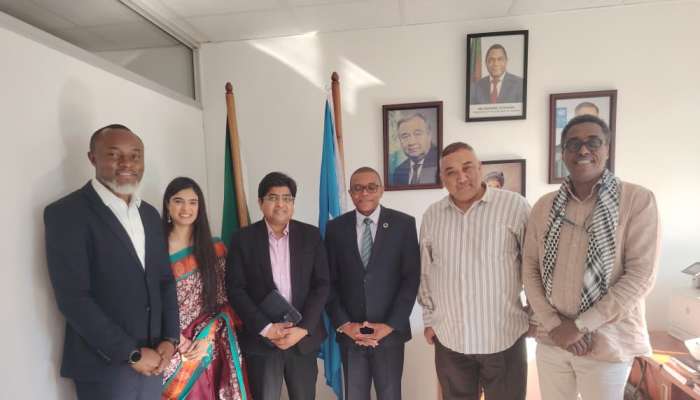
The United Nations Development Programme (UNDP) Zambia and UNDP India, in collaboration with the Ministry of Health, the Zambia Medicines and Medical Supplies Agency (ZAMMSA), and the Smart Zambia Institute, have convened in Lusaka to kick-off support towards the adaptation of India’s Electronic Vaccine Intelligence Network (eVIN) platform for Zambia’s essential medicines, Track & Trace, supply chain management system.
The five-day mission to Zambia, taking place from 18–22 May 2026, brings together technical experts from Zambia and India under a South-South cooperation framework aimed at strengthening pharmaceutical supply chain visibility, accountability, and data-driven decision-making across the health sector.
Originally developed in India to strengthen vaccine logistics and stock visibility, the eVIN platform has become a globally recognized digital public health solution capable of enabling real-time inventory management, temperature monitoring, and improved distribution efficiency. Zambia is now exploring the adaptation of the platform to support broader essential medicines management and health commodity tracking.
The mission comes at a critical time as Zambia continues to strengthen resilience, transparency, and sustainability in the health sector amid increasing pressure on health financing systems and growing demand for digital accountability mechanisms. The initiative aligns with Zambia’s national digital transformation agenda, health systems strengthening priorities, and ongoing efforts to modernize medicine supply chain management.
Throughout the mission, the delegation will engage with senior leadership from the Ministry of Health, Smart Zambia Institute, ZAMMSA, and UNDP, while conducting technical working sessions and field assessments across national, provincial, district, and facility levels. Discussions will focus on interoperability with existing digital health platforms, governance arrangements, workflow adaptation, reporting requirements, metadata architecture, operational bottlenecks, and institutional readiness for pilot implementation.
The mission is also expected to deepen India–Zambia cooperation in digital health innovation and position Zambia as a potential regional model for intelligent pharmaceutical supply chain systems in Africa. A dedicated engagement with the Indian High Commissioner and UNDP teams will explore opportunities for sustained bilateral collaboration and technical support for the pilot phase.
Expected outcomes of the mission include agreement on phase 1 districts (Kafue and Chongwe districts) and facilities, definition of governance and coordination structures, development of a metadata and baseline framework, identification of customization requirements for the Zambia context, establishment of reporting and dashboard requirements, and formulation of a preliminary capacity-building and implementation roadmap.
By leveraging South-South cooperation and proven digital public infrastructure models, the initiative seeks to improve stock visibility, reduce medicine wastage and stockouts, strengthen accountability, and support timely access to essential medicines for communities across Zambia.
UNDP reaffirmed its commitment to supporting the Government of Zambia in accelerating inclusive digital transformation and building resilient, efficient, and sustainable health systems capable of delivering better outcomes for all citizens.