Thursday 25 / June / 2026
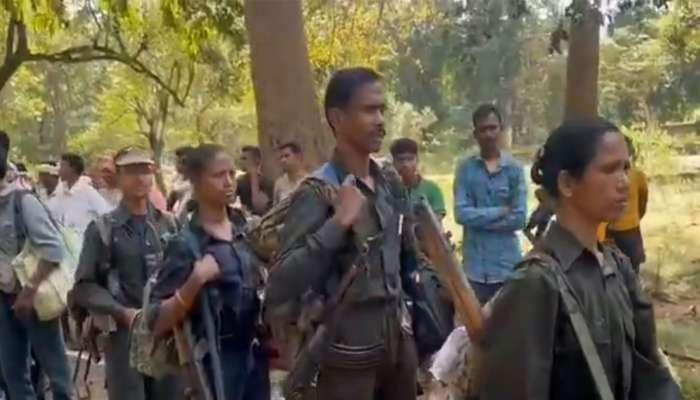
For more than five decades, Left‑Wing Extremism (LWE), commonly known as the Maoist or Naxalite insurgency, posed one of the most enduring internal security challenges in India. At its height, the movement carved out a vast “red corridor” stretching from Jharkhand to Maharashtra, spanning more than a third of India’s districts and embedding itself deeply in remote tribal regions.
Former Prime Minister Manmohan Singh once described the insurgency as the country’s “greatest internal security threat,” a sentiment that reflected the scale, persistence, and complexity of the challenge. Prime Minister Narendra Modi committed to completely eliminating Naxalism by 31 March 2026. Today India stands on the brink of ending this decades‑long conflict. Violence has fallen by more than 90% Maoist influence has shrunk to a handful of pockets, and the insurgency’s organisational structure has nearly collapsed.
A symbolic turning point came on 18 November 2025 when security forces reportedly killed Madvi Hidma, and four other Maoists in an encounter in the Maredumilli forest area of Alluri Sitharama Raju district, Andhra Pradesh. Hidma was a highly sought-after Indian Maoist/Naxalite known for orchestrating major attacks on Indian security forces, like the deadly 2013 Darbha Valley ambush.
Earlier this year in May, most‑wanted Maoist commander, Nambala Keshava Rao ‘Basavaraju’ was killed in a major security operation in Chhattisgarh. His death, along with 26 others, marked a breach in the Maoists’ last line of defence in Bastar, the forested heartland where the insurgency had built its fiercest stronghold since the 1980s. Home Minister Amit Shah described the operation as the most decisive strike in three decades.
But the decline of Maoism was not the result of a single encounter. It was the culmination of years of sustained pressure, strategic adaptation, and a multi‑layered approach that blended calibrated security action with governance reforms and community engagement.
The statistical decline in violence underscores the depth of India’s success against Left‑Wing Extremism. Under a firm zero‑tolerance policy, security forces eliminated 90 Naxals, arrested 104, and secured the surrender of 164 individuals by March 2025. The previous year had already marked a decisive shift, with 290 Naxalites neutralised, 1,090 arrested, and 881 surrendering. March 2025 alone demonstrated the accelerating collapse of the insurgency: on 30 March, fifty Naxalites surrendered in Bijapur, Chhattisgarh; a day earlier, security agencies neutralised sixteen cadres and recovered a large cache of automatic weapons in Sukma; and on 20 March, two coordinated operations in Bijapur and Kanker resulted in the elimination of twenty‑two Naxals, marking another major milestone in the ongoing ‘Naxalmukt Bharat Abhiyan’.
The broader trend reflects a historic transformation. Between 2014 and 2024, Naxal‑related incidents declined sharply, accompanied by the neutralisation of fifteen top Maoist leaders and the more effective delivery of government welfare schemes to remote communities. Former strongholds such as Buddha Pahad and Chakarbandha have been completely freed from Maoist influence, and an estimated 85% of the insurgent cadre strength in Chhattisgarh has been dismantled. Since January 2024 alone, Chhattisgarh has witnessed the killing of 237 Naxalites, the arrest of 812, and the surrender of 723. Across the broader conflict landscape, more than 13,000 individuals from the Northeast, Kashmir, and LWE‑affected regions have renounced violence and rejoined mainstream society.
The geographical footprint of the insurgency has contracted dramatically. In 2014, Naxal incidents were reported across 330 police stations; today, that number has fallen to 104. The area once affected by LWE spanned more than 18,000 square kilometres, but now covers only about 4,200 square kilometres. The period from 2014 to 2024 saw a 53% reduction, with incidents dropping to 7,744. Security force casualties fell even more sharply by 73% from 1,851 to 509.
Institutional capacity has expanded in parallel with security gains. In 2014, India had just 66 fortified police stations in LWE‑affected regions; over the past decade, this number has risen to 612.
The decisive shift began with the 2015 National Policy and Action Plan, which rejected the idea that a purely militaristic approach could defeat the insurgency. Instead, it adopted a holistic strategy built on security operations, development interventions, and the protection of rights and entitlements for local communities. Roads, telecom towers, schools, banking access, and welfare delivery were expanded into remote regions that had long been isolated. These areas, once inaccessible to the state, became connected to mainstream governance. The strategy recognised that Maoism thrived not merely on ideology but on the grievances of marginalized tribal communities who felt excluded from economic growth and deprived of state services. By addressing these grievances, the state undercut the insurgency’s social base.
Security operations were recalibrated to minimise collateral damage and avoid alienating local populations. New forward operating bases were established, intelligence networks strengthened, and coordination among central and state forces improved. The emphasis was on precision, patience, and persistence rather than overwhelming force. This approach preserved the legitimacy of the state and prevented the kind of civilian backlash that often fuels insurgencies. Rehabilitation and reintegration programmes offered pathways for cadres to return to mainstream society, providing vocational training, financial assistance, and livelihood support.
Internal weaknesses within the Maoist movement also contributed to its decline. Many senior leaders were killed or surrendered over the years, leaving the organisation without coherent command and control. Security experts noted a crisis of recruitment, with fresh cadres drying up and military formations shrinking. Maoist documents themselves admitted shortages of ammunition, declining morale, and reduced operational capability.
A crucial pillar of India’s strategy to defeat Left‑Wing Extremism was the systematic dismantling of the insurgency’s financial networks. To choke the Maoists’ funding channels and break their economic backbone, agencies such as the National Investigation Agency and the Enforcement Directorate intensified operations, seizing large sums of illicit money and disrupting the flow of resources that sustained the movement. Under the Prevention of Money Laundering Act, cases were filed against financiers and facilitators, ensuring that those who enabled the insurgency were prosecuted and removed from the ecosystem that supported it. This financial crackdown was complemented by a dramatic expansion of development spending in affected regions, with budget allocations increased by 300%. By simultaneously cutting off the insurgents’ financial lifelines and accelerating development in neglected tribal and rural areas, the state pursued a dual strategy that weakened the Maoists operationally while strengthening governance and public trust in regions long deprived of state presence.
The Lok Sabha was informed that since 2019, 1,106 Maoists had been killed, 7,311 arrested, and 5,571 surrendered. As part of the zero-tolerance policy against Left Wing Extremism, 90 Naxals have been killed, 104 arrested, and 164 have surrendered in the year, by March 2025. In 2024, 290 Naxalites were neutralized, 1,090 were arrested, and 881 surrendered.
These numbers reflect a near‑collapse of the insurgency’s operational capacity. But beyond the statistics lies a deeper lesson: India’s success was rooted in its refusal to abandon democratic principles. Excessive force was avoided, and human rights were prioritised. The state recognised that winning the trust of local communities was as important as neutralising armed cadres. Development was not an afterthought but a central pillar of the strategy. Roads, schools, and welfare programmes did more to weaken the insurgency than any single military operation.
The story of this transformation is not merely one of military success; it is a testament to the power of patient strategy, inclusive development, and democratic resilience. It offers a model for other nations confronting internal insurgencies without resorting to excessive force.